Identification
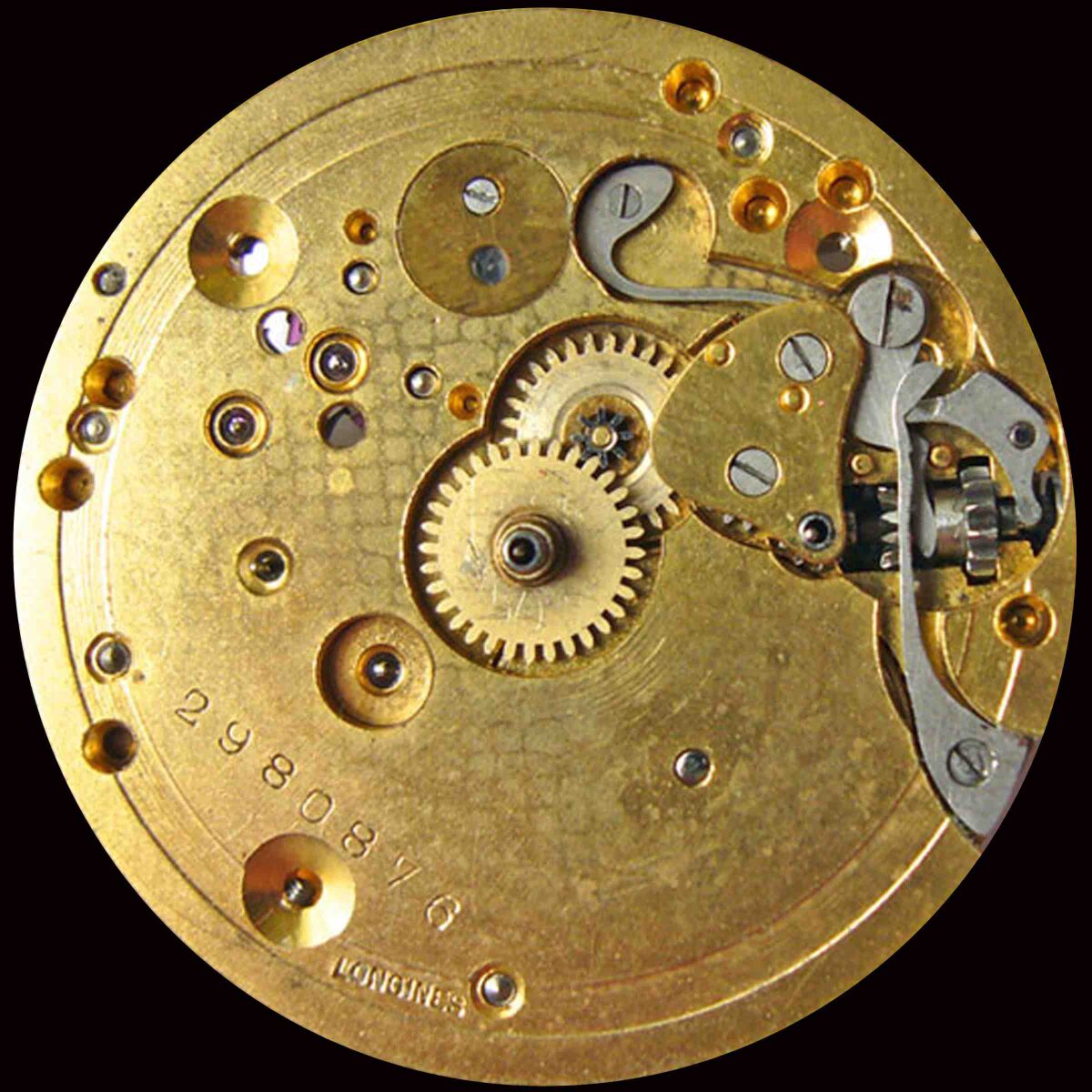
Manual-winding chronograph calibre developed by Longines in Saint-Imier in 1913. The original technical designation is 13.33; the “Z” suffix is a later nomenclature.
Historical context
The 13.33 emerged during a key transition when the chronograph moved from pocket watches to wristwatches. Unlike many contemporary movements that were simply reduced in size, it was designed from the outset for wrist use.
It stands as one of the earliest Longines chronographs specifically adapted to this new context, at a time when ergonomics and legibility were becoming essential functional requirements.
Movement architecture
The 13.33 is an integrated column-wheel chronograph, characteristic of high-grade constructions of the early twentieth century.
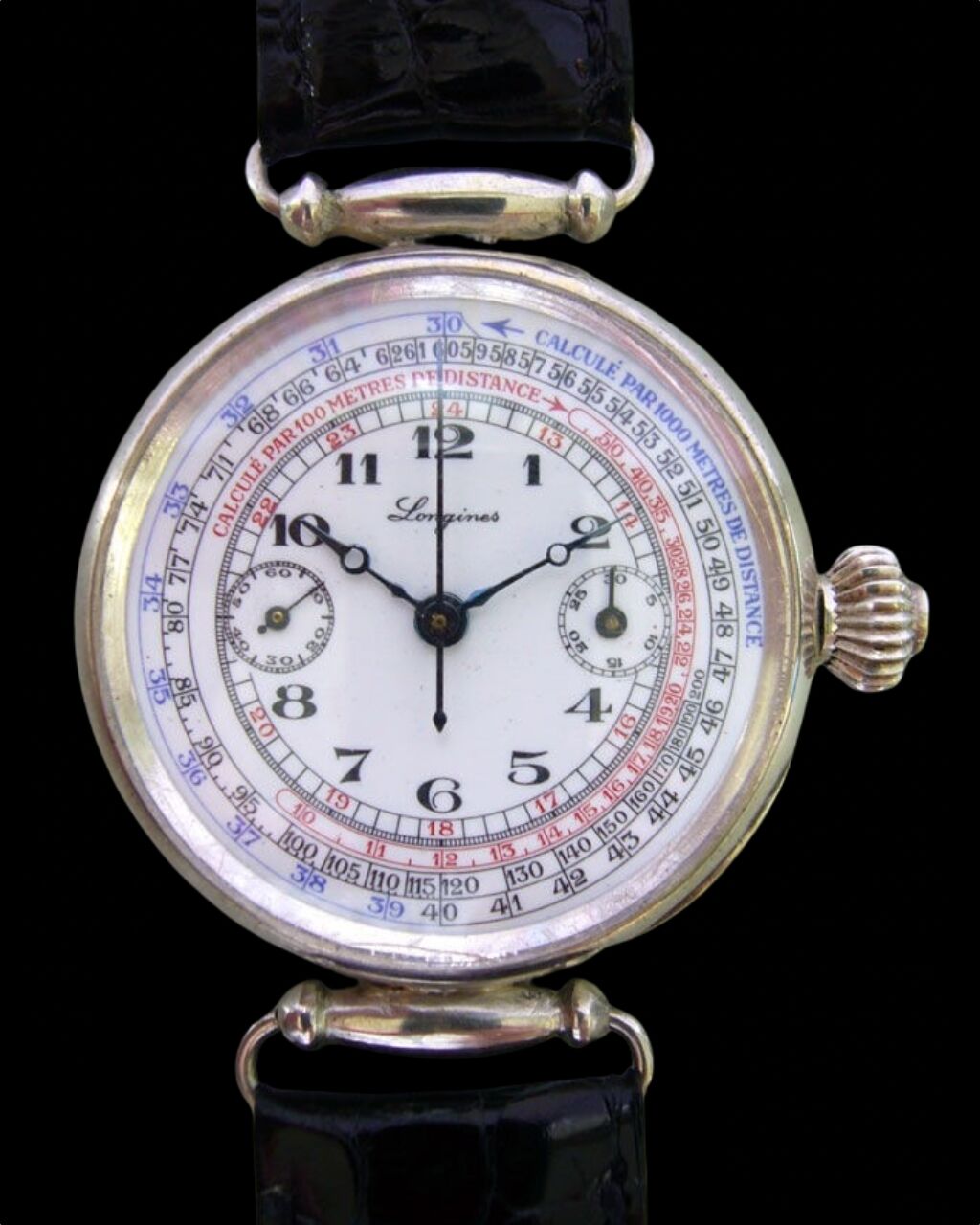
In its most common configuration, it is a single-pusher chronograph operated through the crown, with the classic sequence of start, stop and reset.
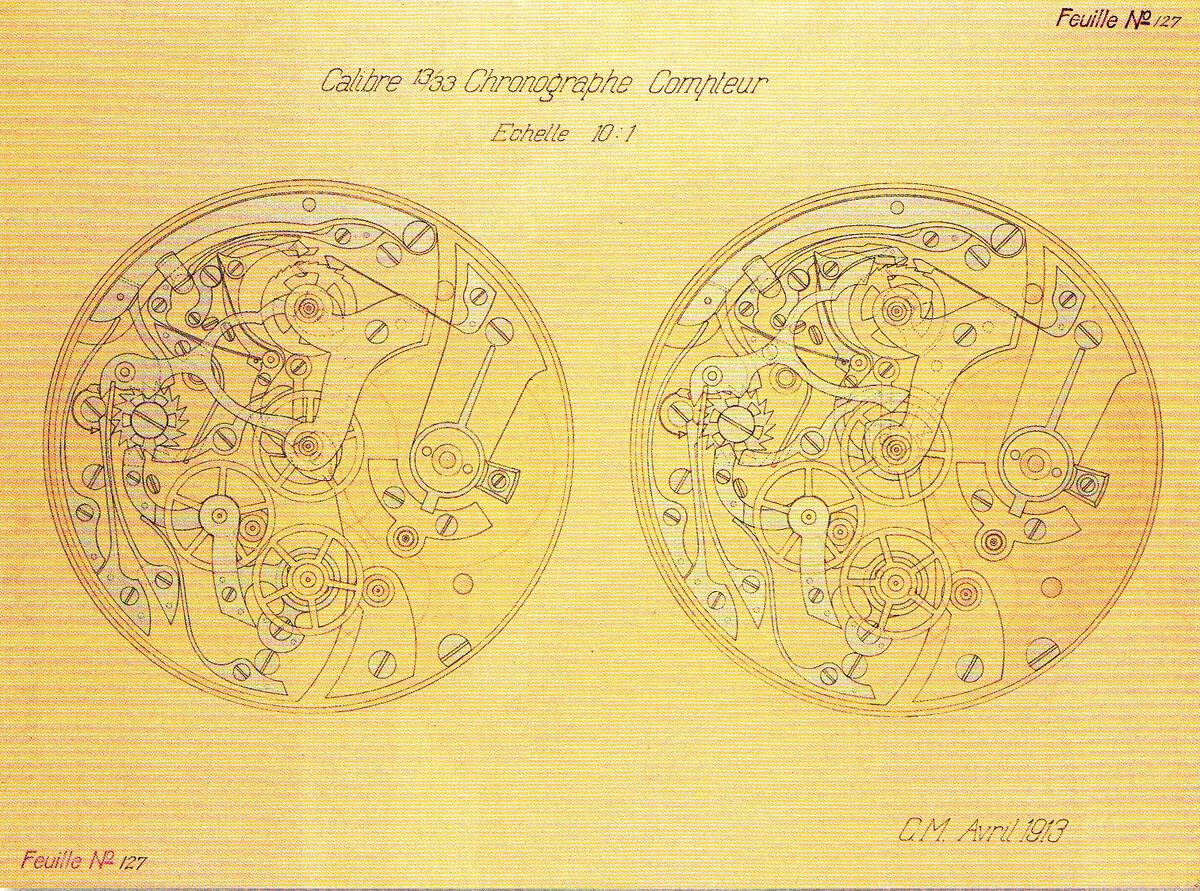
The original technical drawings confirm a non-modular construction, a rational layout of the chronograph components and a level of compactness that was notable for its time.
The movement also features a jumping minute counter, an advanced characteristic for the period according to Longines documentation, as well as an architecture designed to preserve efficiency despite the fully integrated chronograph mechanism.
Variants / evolution
The standard version is the single-pusher chronograph.
Variants with flyback function are reported from the 1920s, possibly linked to aviation use. This point is documented in specialist literature but remains less consistently established than for later movements such as the 13ZN, and should therefore be considered with caution.
Uses
The 13.33 belongs to the early practical uses of wrist chronographs: short interval timing, sport, automotive and technical applications.
Some pieces are associated with aviation contexts, consistent with Longines’ historical involvement in timing for navigation and flight.
Horological significance
The 13.33 holds an important place in the history of the wrist chronograph. It marks the transition from adapted pocket-watch movements to purpose-built wrist chronographs, introduces a compact integrated architecture, and directly foreshadows later Longines developments in this field.
It thus represents a technical and conceptual foundation for the manufacture’s subsequent chronograph calibres.
Summary
The Longines 13.33 is an early integrated chronograph designed specifically for wristwatches. Its column-wheel construction, compact design and historical positioning make it a foundational calibre in the evolution of the modern chronograph.