Conclusion
This Angélus Carillon clock, with its 8-day movement and refined striking mechanism, embodies the elegance of Swiss horology in the 1950s. Combining sober design, noble materials, and precise mechanics, it reflects the high level of quality reached by Angélus during the mid-20th century.
Description
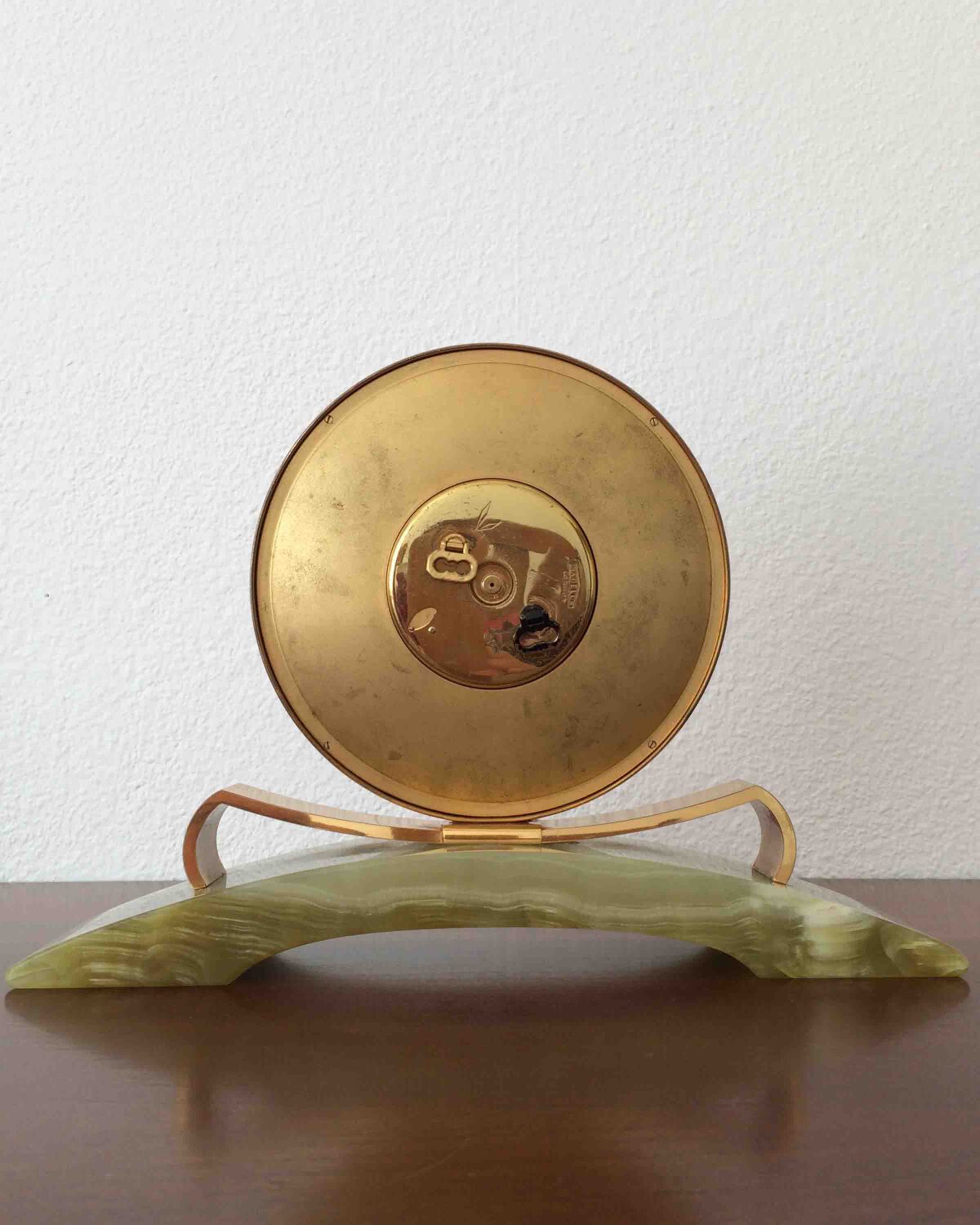
Table clock by the Angélus brand, Carillon model, produced around 1950 by the Stolz Frères company in Le Locle.
- Dial diameter: 15 cm
- Base: green onyx, width 27 cm
- Total height: 20 cm
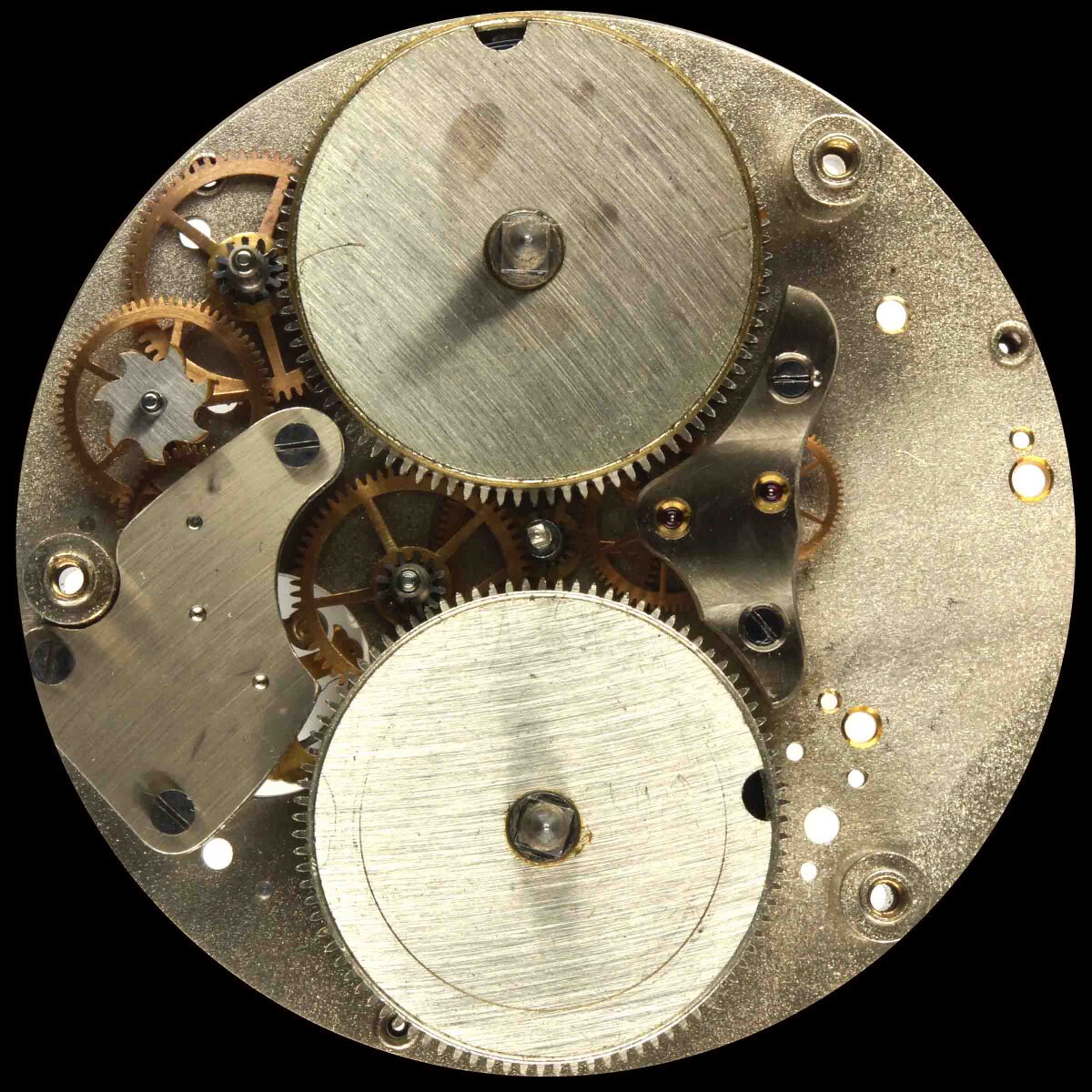
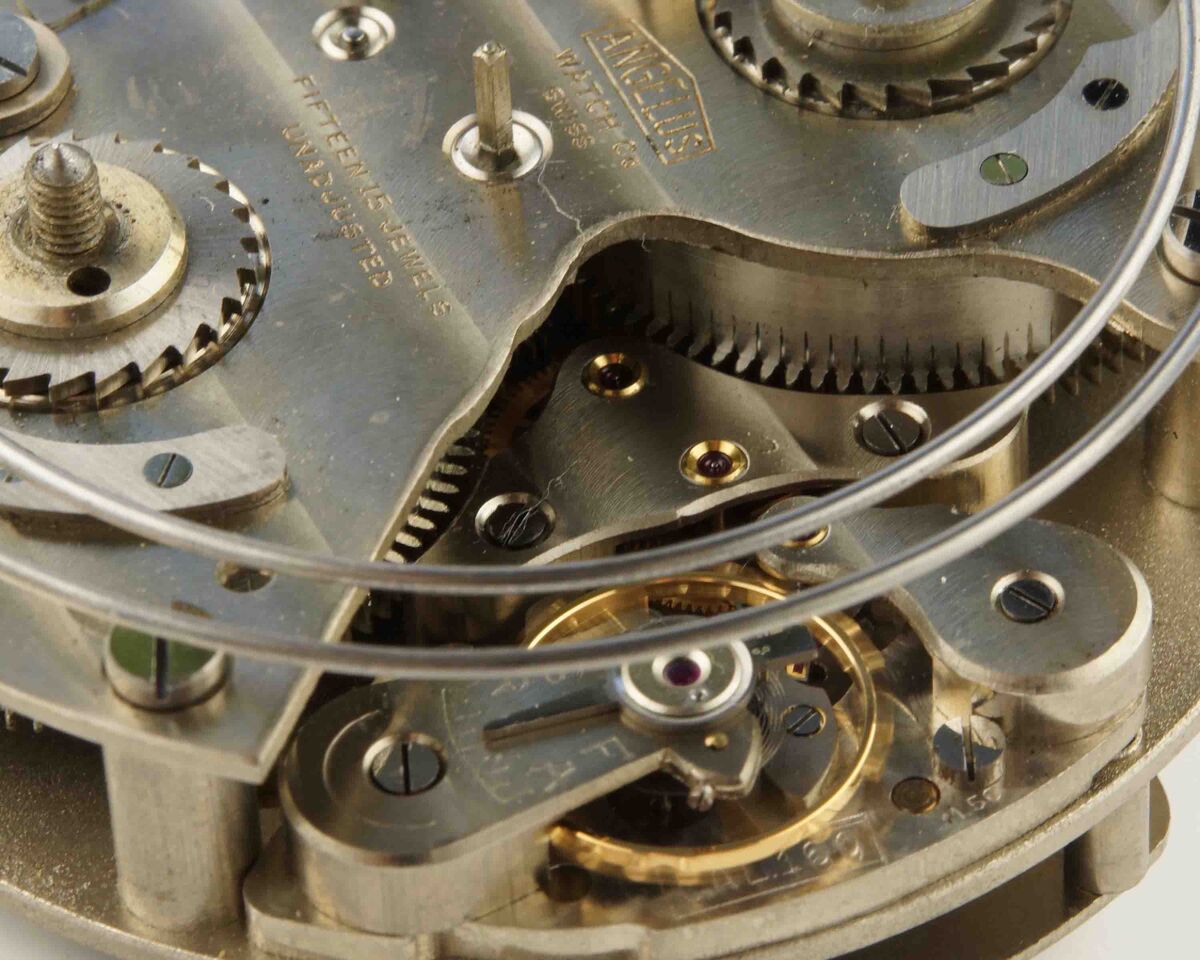
- Caliber: Angélus 160
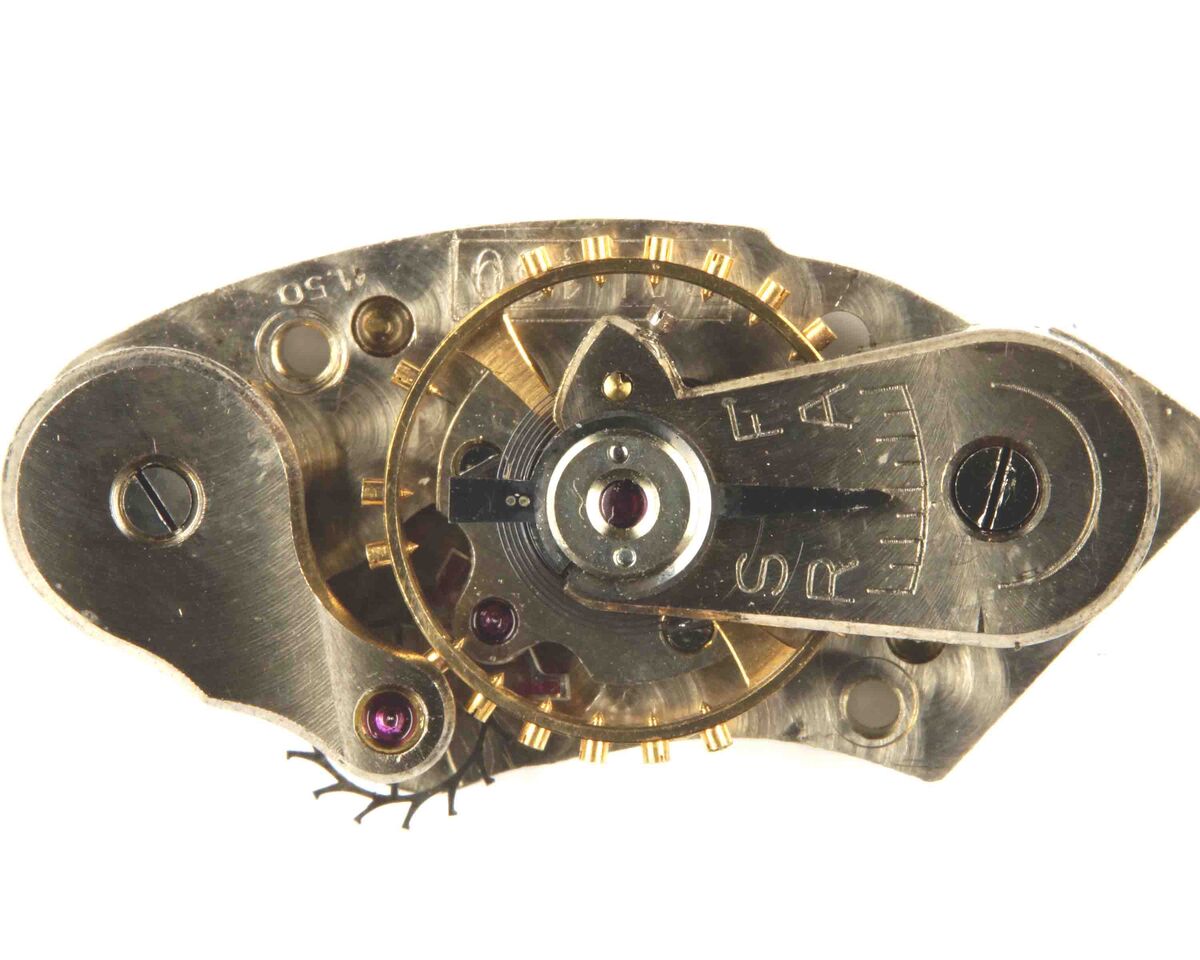
- Escapement: lever
- Power reserve: 8 days
- Striking: hours and half-hours on gong
- Period: 1950
Historical Note
Founded in 1891 in Le Locle by the Stolz brothers, the Angélus manufacture became renowned for its table clocks and innovative chronographs. The Carillon models, equipped with the caliber 160, stood out for their 8-day autonomy and gong striking, making them among the most refined table clocks of their era.
The Angélus caliber 160 marked an important milestone for the brand, offering 8-day clocks with hour and half-hour striking in a compact and elegant format. These models, often more expensive than simple clocks, were aimed at a discerning clientele seeking a timepiece that was both functional, musical, and decorative.
Today, these 1950s Angélus clocks have become rare and highly sought after, both for their technical quality and for their heritage value.