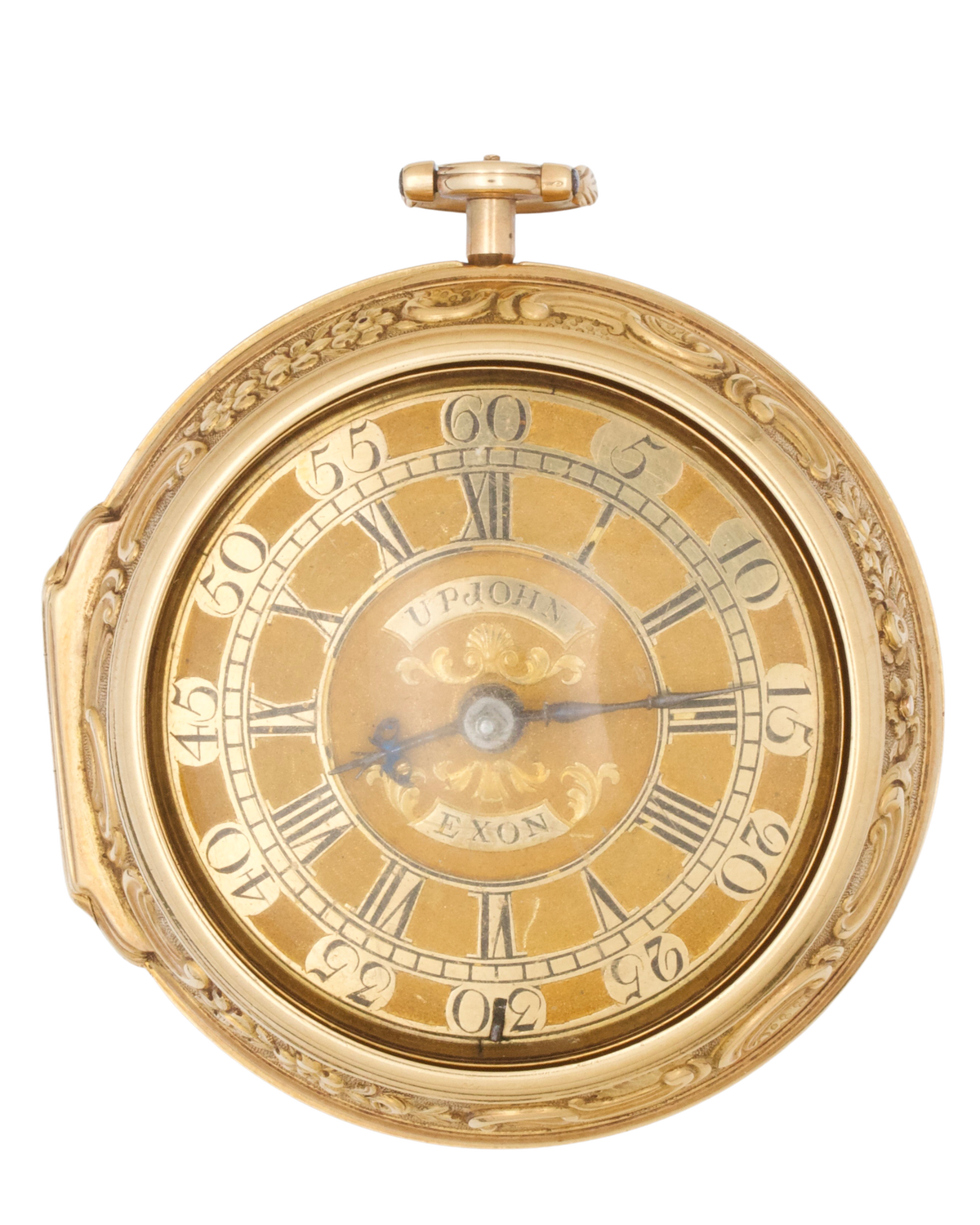
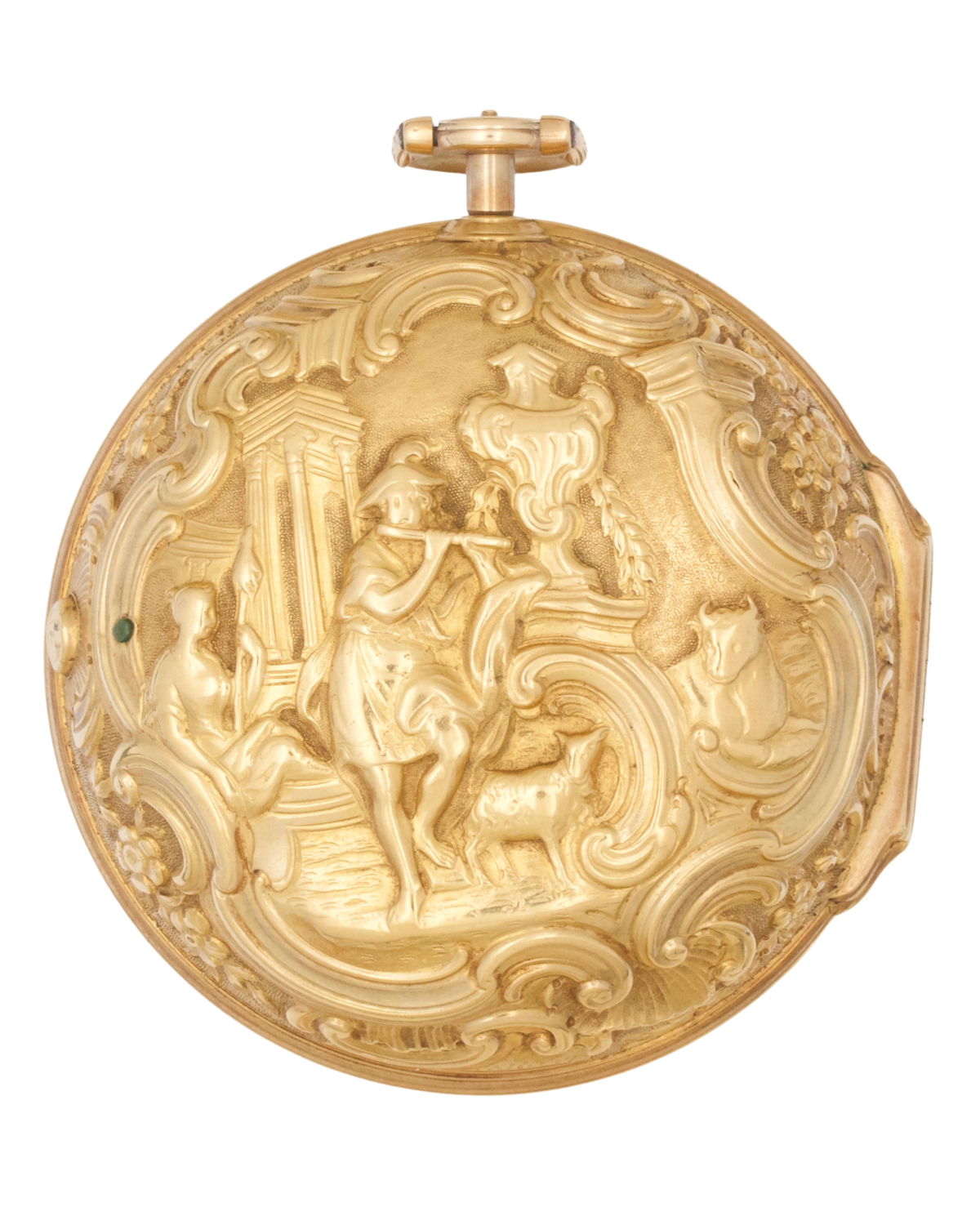
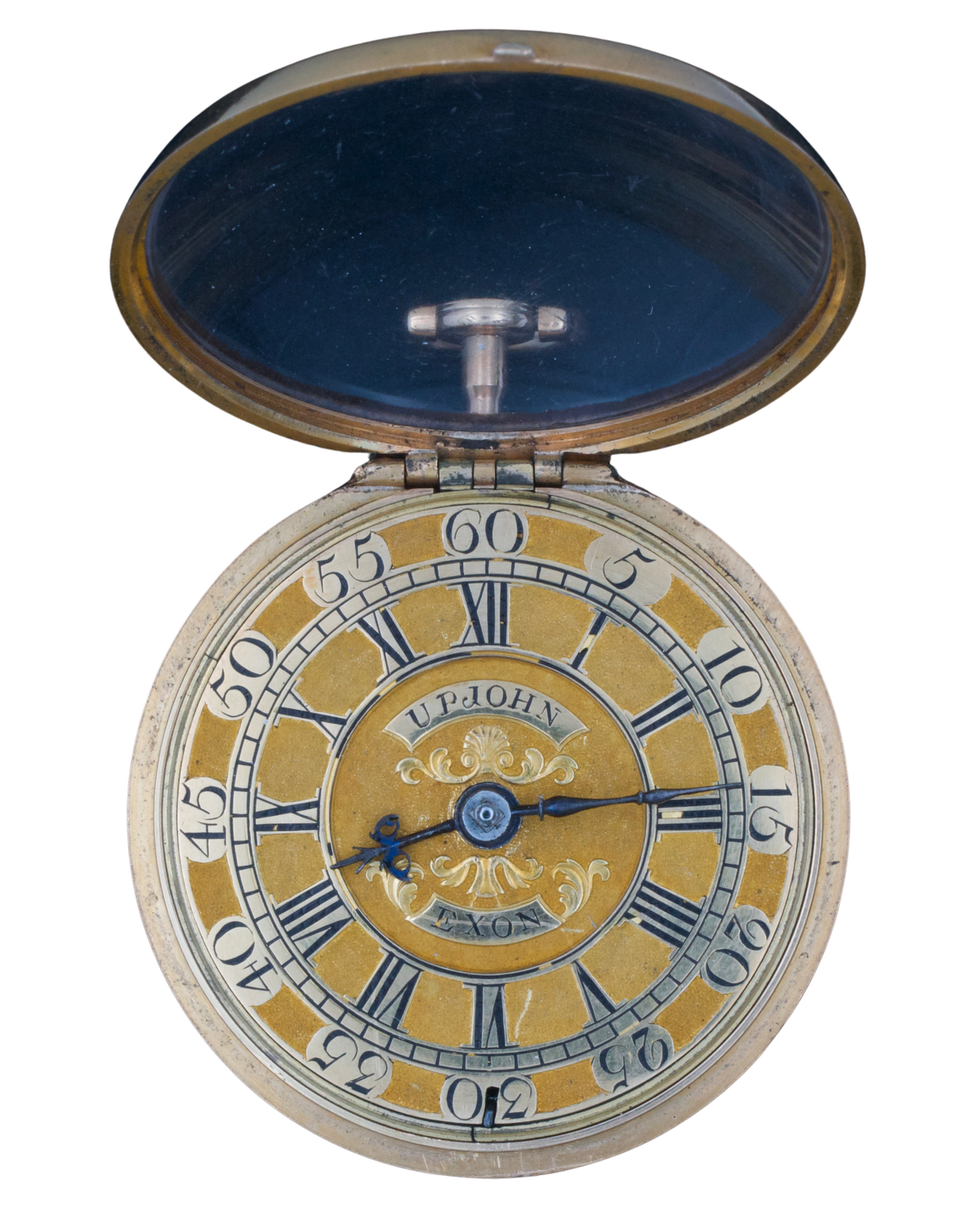
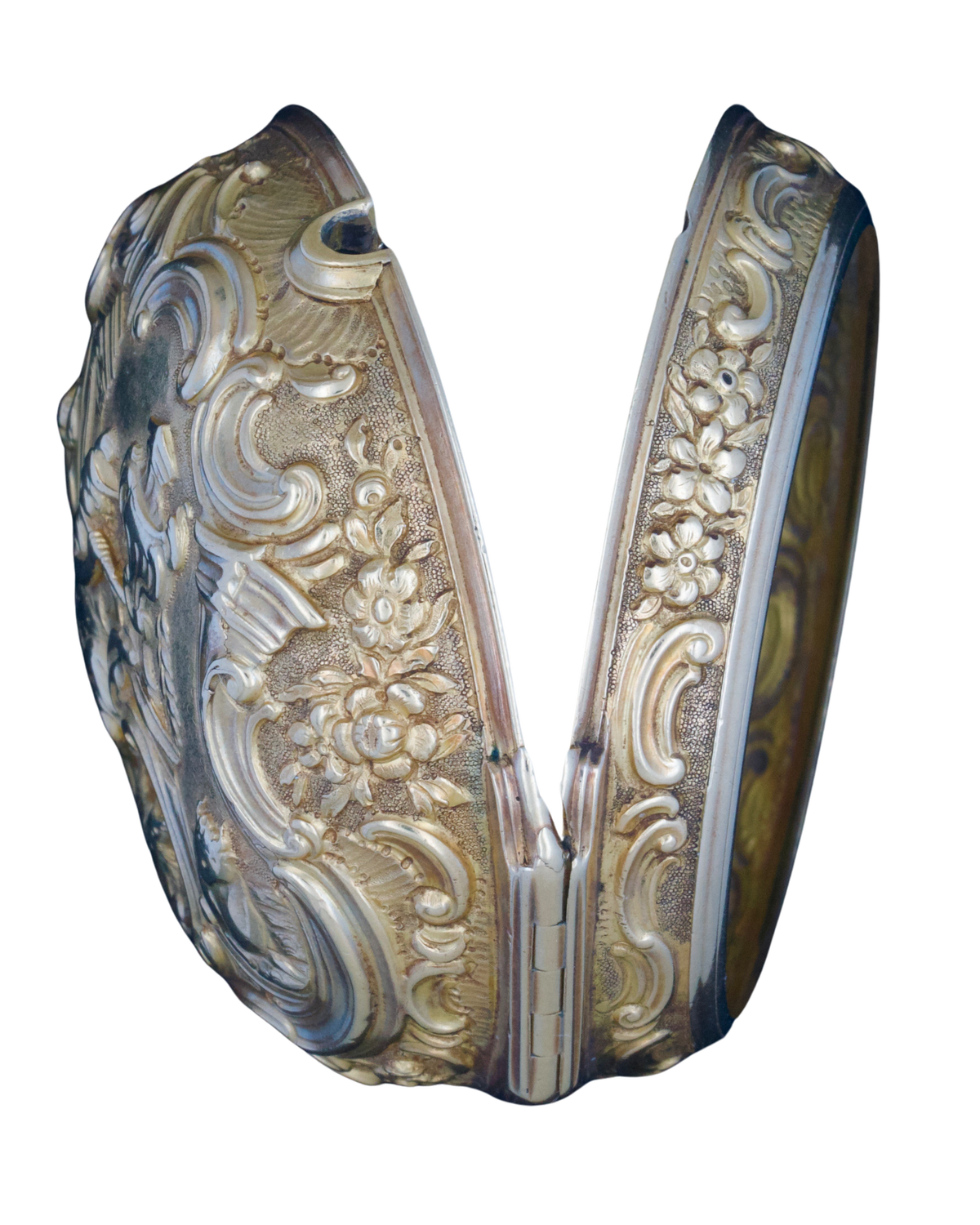
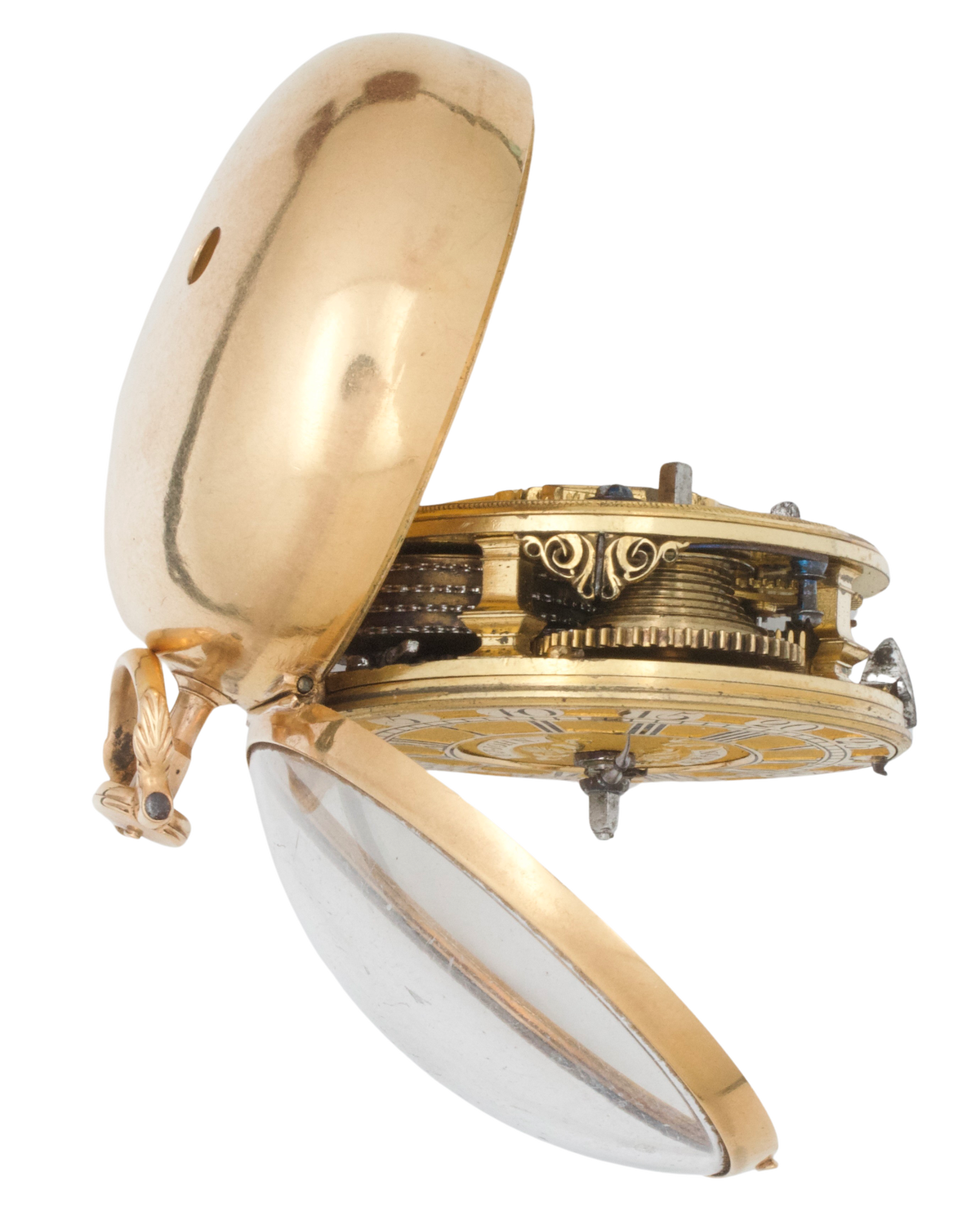
Beneath its golden curves and its finely crafted dial, this verge-and-fusee pocket watch signed Edward Upjohn at Exeter embodies the very essence of 18th-century English watchmaking. A true work of art as much as a measuring instrument, it condenses within its chased gold a whole world of elegance, science, and patience.
The surface of its case, finely repoussé-worked and hand-chased, seems to recount an era when every watch bore the trace of an artisan’s hand. The gilt dial, combining Roman and Arabic numerals, catches the light softly, while the muted ticking of the verge-and-fusee movement recalls the first heartbeats of timekeeping.
Here, nothing is left to chance: mechanics become sculpture, precision turns to poetry. Every component, from the openworked cock to the fusee chain, reveals the hand of a master watchmaker and the spirit of a century that still conceived time as a work of art.
The surface of its case, finely repoussé-worked and hand-chased, seems to recount an era when every watch bore the trace of an artisan’s hand. The gilt dial, combining Roman and Arabic numerals, catches the light softly, while the muted ticking of the verge-and-fusee movement recalls the first heartbeats of timekeeping.
Here, nothing is left to chance: mechanics become sculpture, precision turns to poetry. Every component, from the openworked cock to the fusee chain, reveals the hand of a master watchmaker and the spirit of a century that still conceived time as a work of art.