An iconic watch viewed through restoration
A brief history
Introduced in 1962 at the Basel Watch Fair, the Rado DiaStar marked a turning point in Swiss serial watchmaking. It was presented as the world’s first scratch-proof watch, a bold claim at a time when cases were primarily made of steel or gold.
Its name combines two strong ideas:“Dia”, referring to diamond-like hardness, and “Star”, symbolising lasting brilliance.The DiaStar was not designed as a traditional luxury watch, but as a technical object, built to resist time and daily wear.
An innovative case: hardmetal, screw-down caseback and integrated sapphire crystal
The DiaStar’s most distinctive feature is its hardmetal case, made from sintered tungsten carbide.
This material is extremely resistant to scratches, but lacks elasticity.
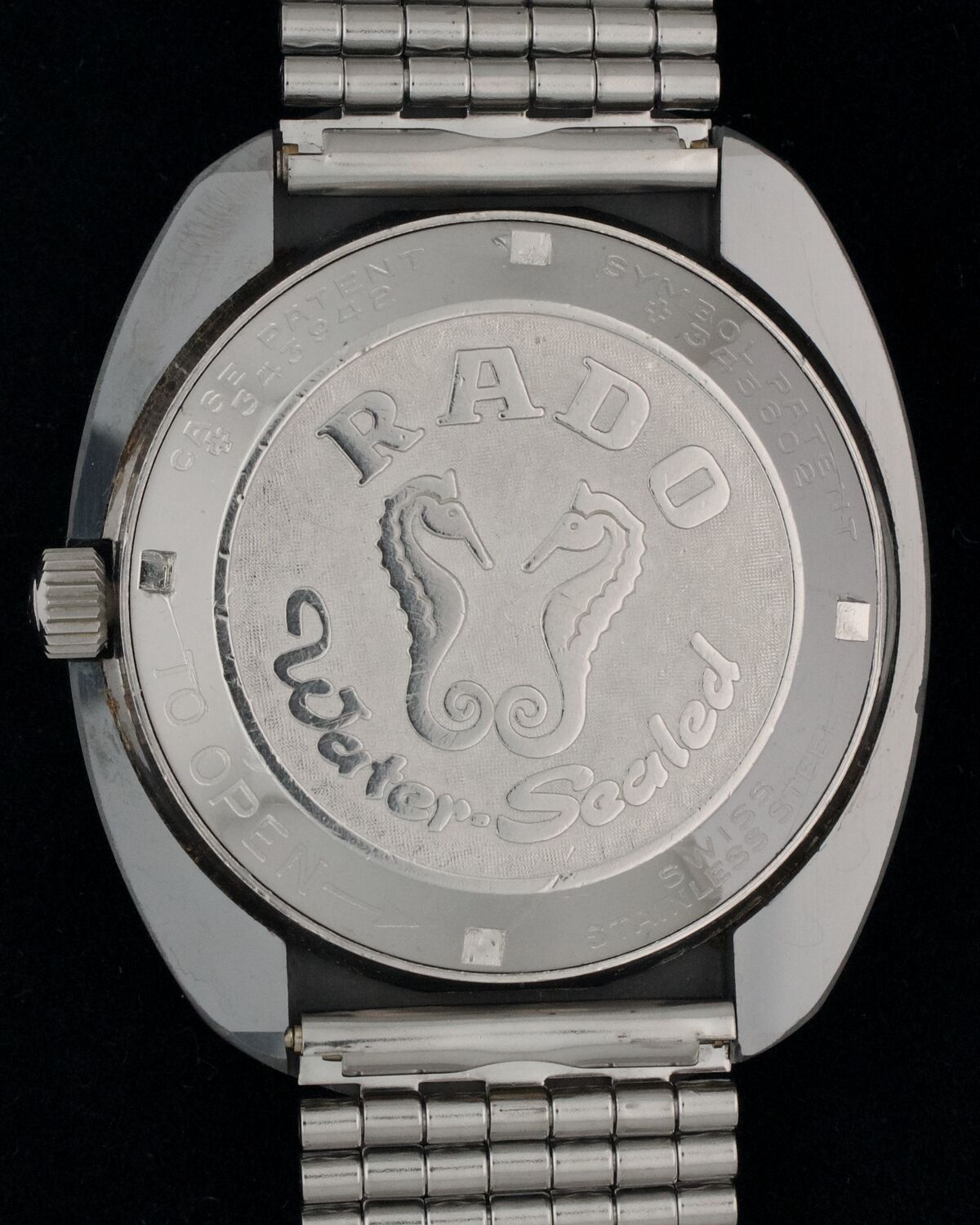
The construction is completed by a screw-down caseback, ensuring reliable water resistance for its time through controlled compression of a gasket. This system is protected by a patented design, adapted specifically to the rigidity of hardmetal.
Finally, the DiaStar incorporates one of the earliest synthetic sapphire crystals used in serial watchmaking.
The crystal is not merely fitted:
it is structurally integrated into the case using a patented process that ensures stability, sealing, and exceptional scratch resistance.
Together, the case, caseback and crystal form a coherent technical assembly, protected by several patents filed between 1958 and 1961.
The movement and its many jewels
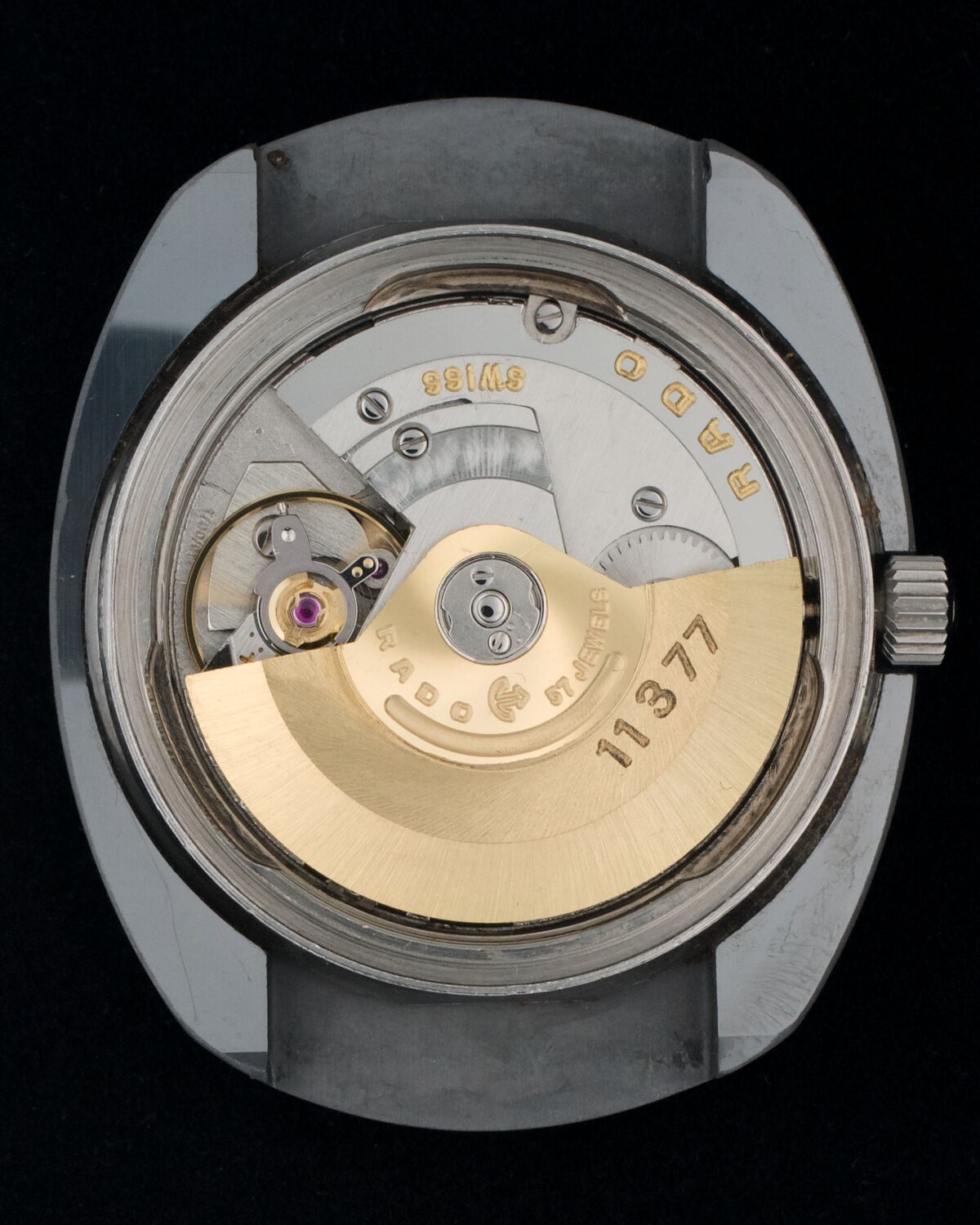
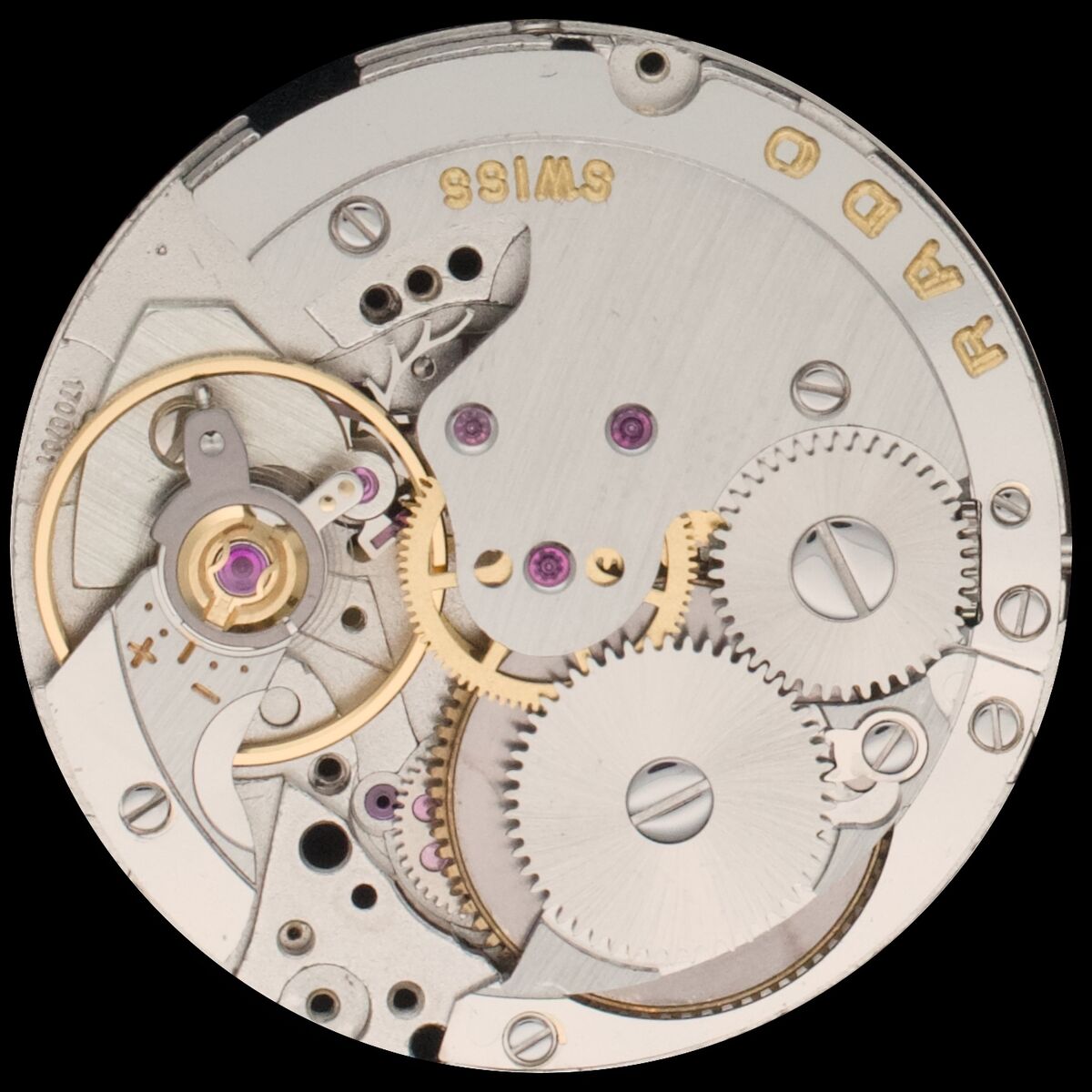
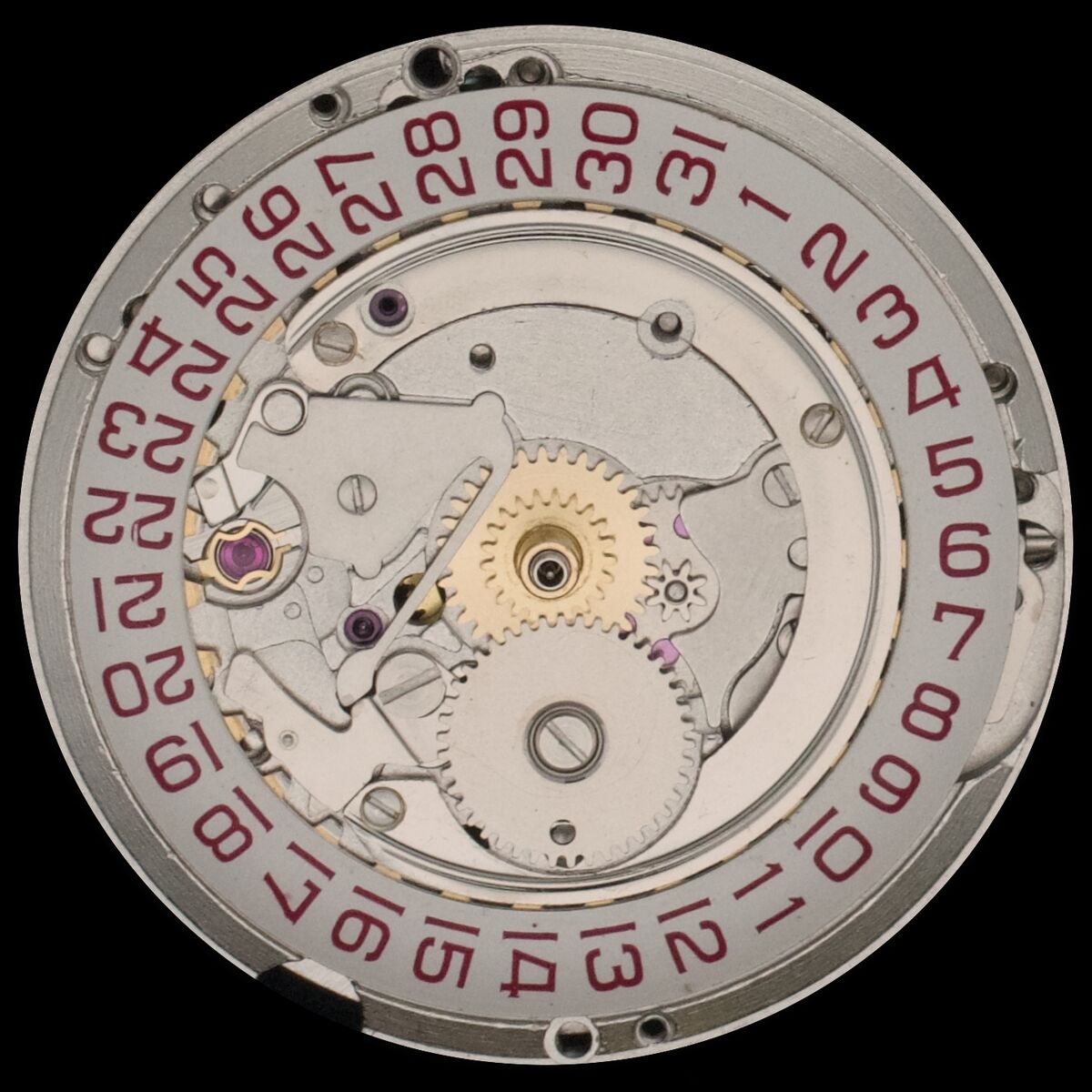
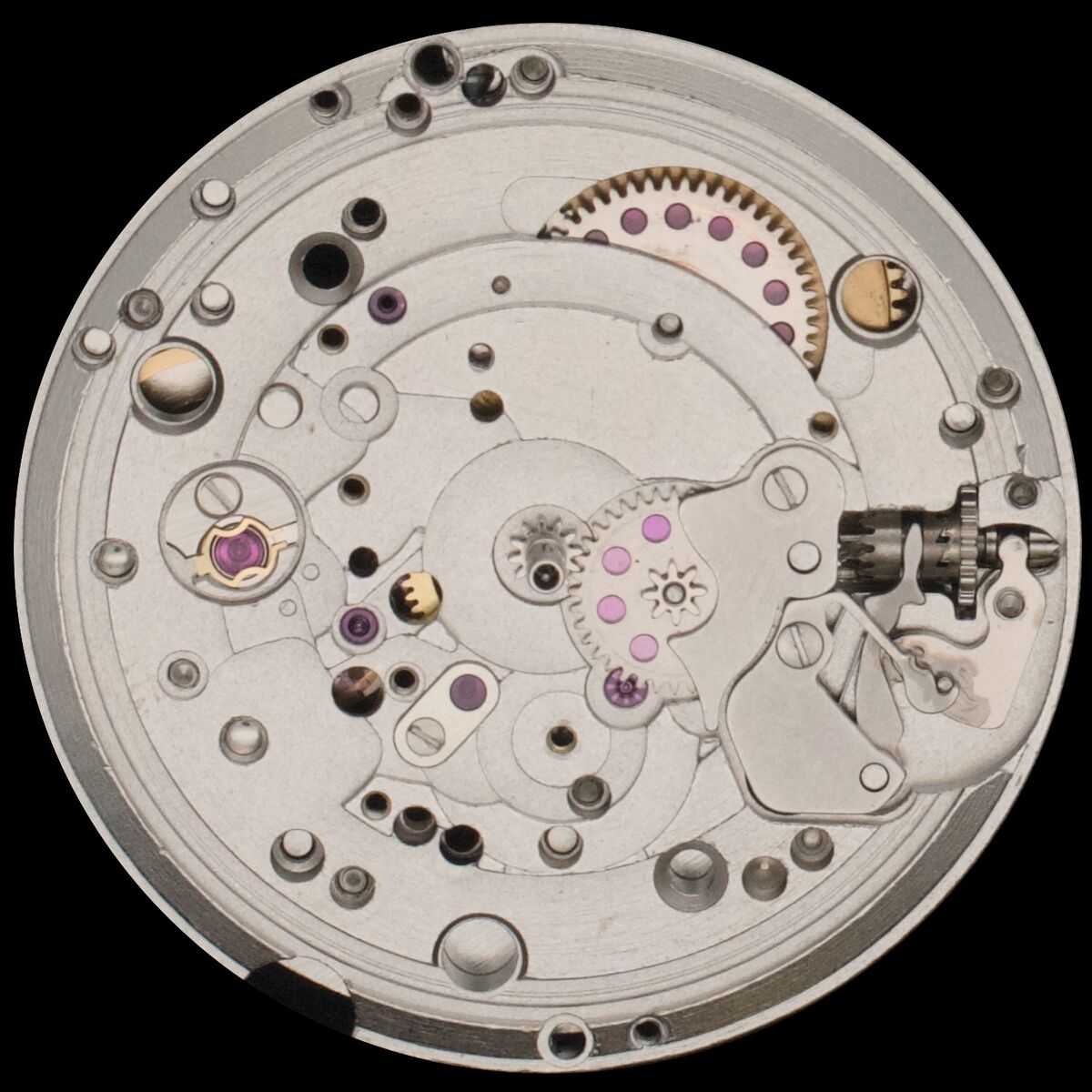
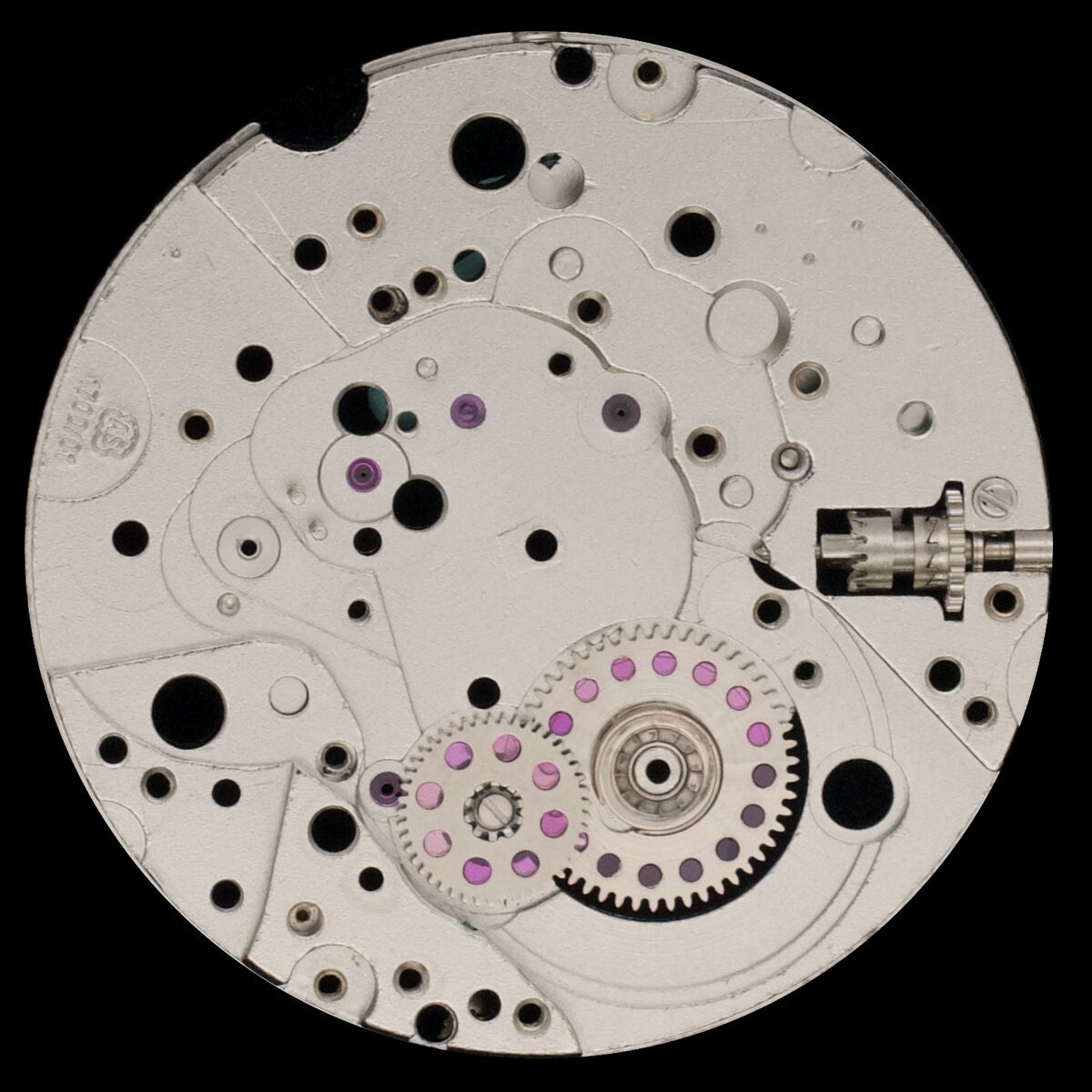
When the movement is partially dismantled, one detail immediately stands out: the very high number of jewels,
reaching up to 57 in some versions.
From a modern horological perspective, such a number is clearly excessive:
many of these additional jewels offer no real benefit in terms of reliability,
They primarily reflect a marketing approach typical of the 1950s and 1960s, when brands competed on jewel counts to enhance perceived value.
Today, these jewels mainly serve as a historical testimony rather than a technical necessity.
The moving logo on the dial: a discreet indicator
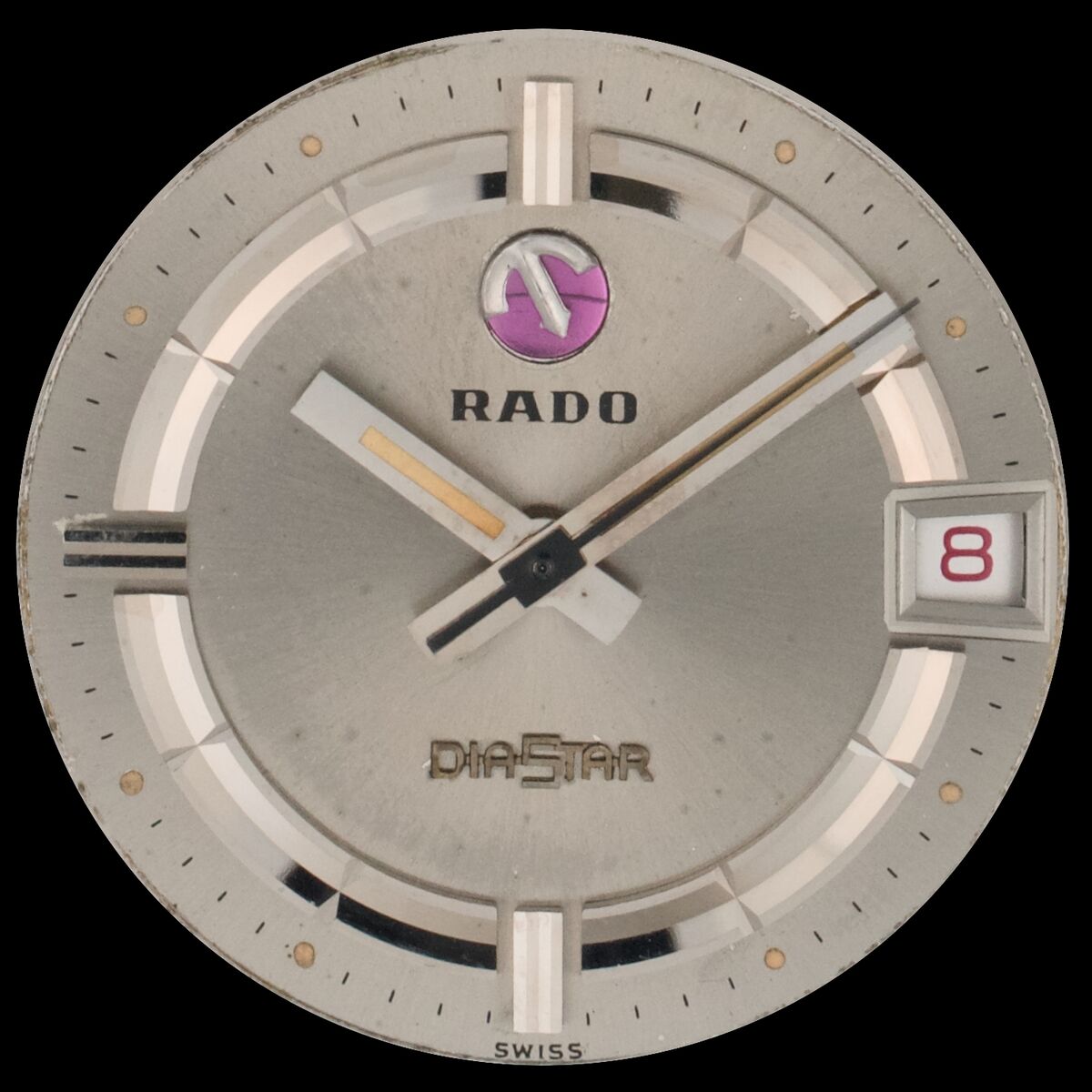
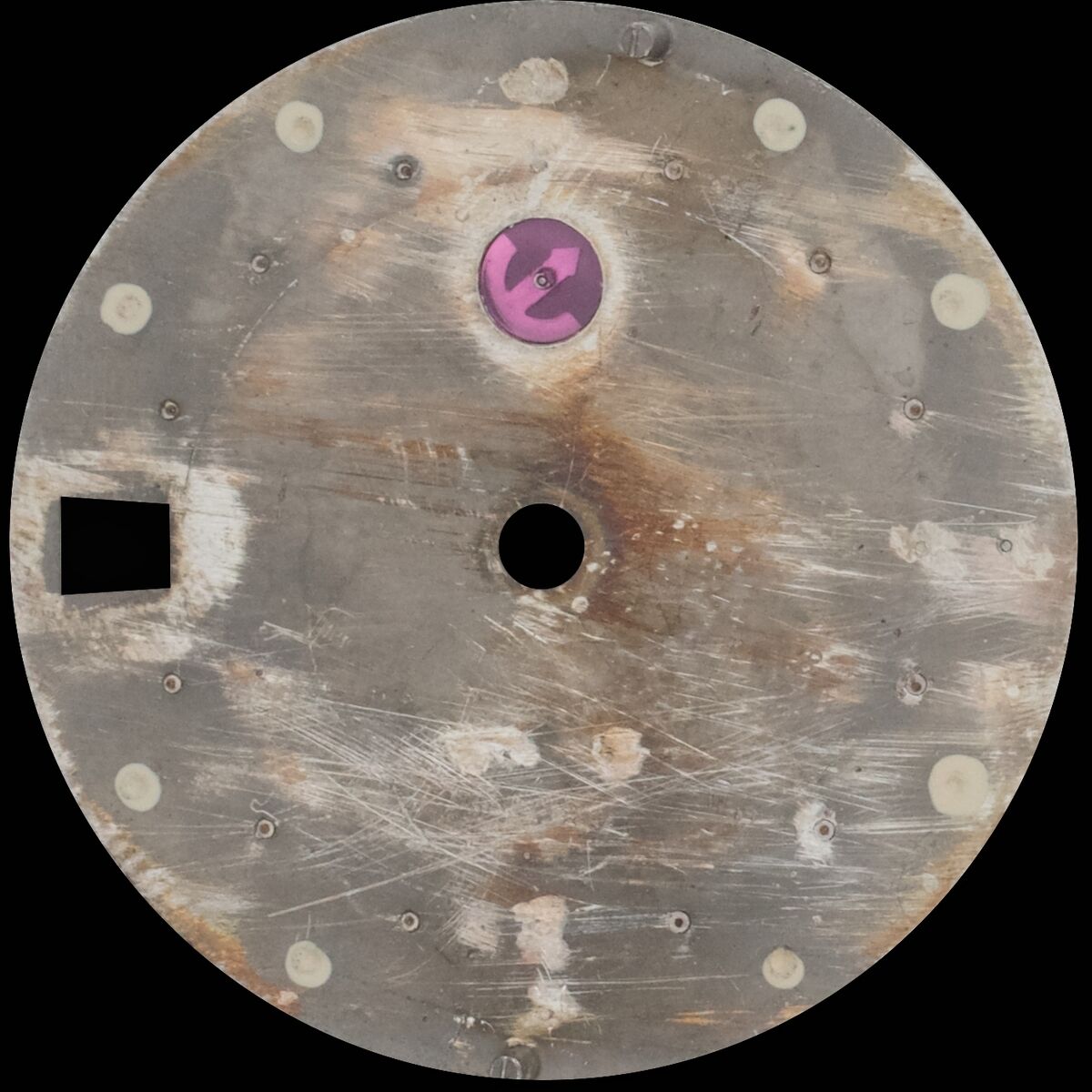
On the dial, the Rado anchor logo, mounted in a small synthetic ruby, immediately draws attention.
Contrary to appearances, it is not purely decorative.
The logo is free-moving, rotating under the effect of gravity.Its axle is lubricated using the same oil as the movement itself.
When the oil is fresh and fluid, the logo moves freely.
As the oil ages or thickens, the logo slows down or may stop completely.
Without opening the watch, this feature provided a visual indication of the lubrication state of the movement.This system is covered by a patent filed in 1958, illustrating Rado’s pragmatic and technical mindset during that period.

A La Clinique Horlogère
Rue du Creugenat 29
2900 Porrentruy
Tél +41 32 466 14 86
info@cliniquehorlogere.ch