
In 1894, in Le Locle, Numa-Émile Descombes and Ulysse Perret founded Descombes & Perret. After Descombes’ death in 1897, Perret partnered with Louis-Édouard Berthoud to create Perret & Berthoud. On 2 September 1898, the Universal Watch trademark was registered, marking the start of a name that would soon become known worldwide.
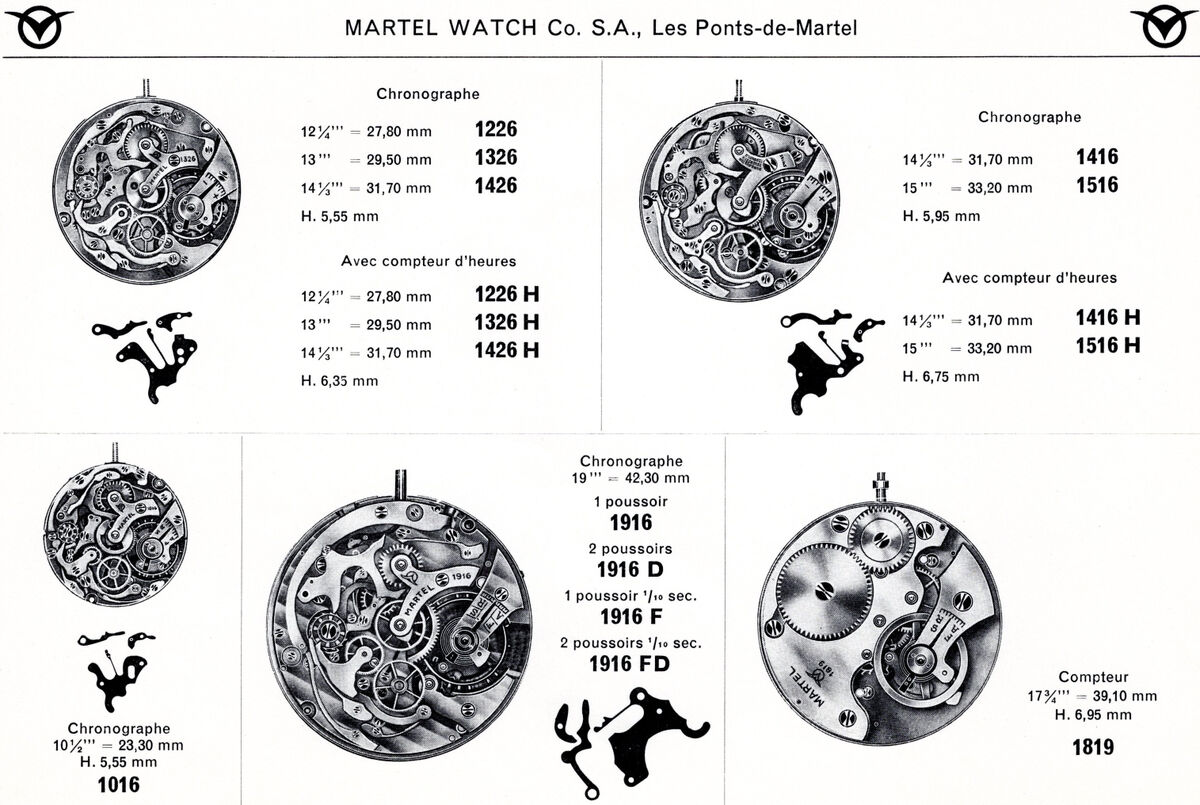
In 1911, Georges Pellaton-Steudler founded Martel Watch Co., first in Le Locle and then, from 1915, in Les Ponts-de-Martel. The company specialized in complicated movements — repeaters and chronographs. Martel quickly became a supplier to Universal Genève, even delivering early wrist chronographs with monopusher crown-actuated designs.
By 1929, Universal reportedly held about a third of Martel’s shares, confirming their close link.
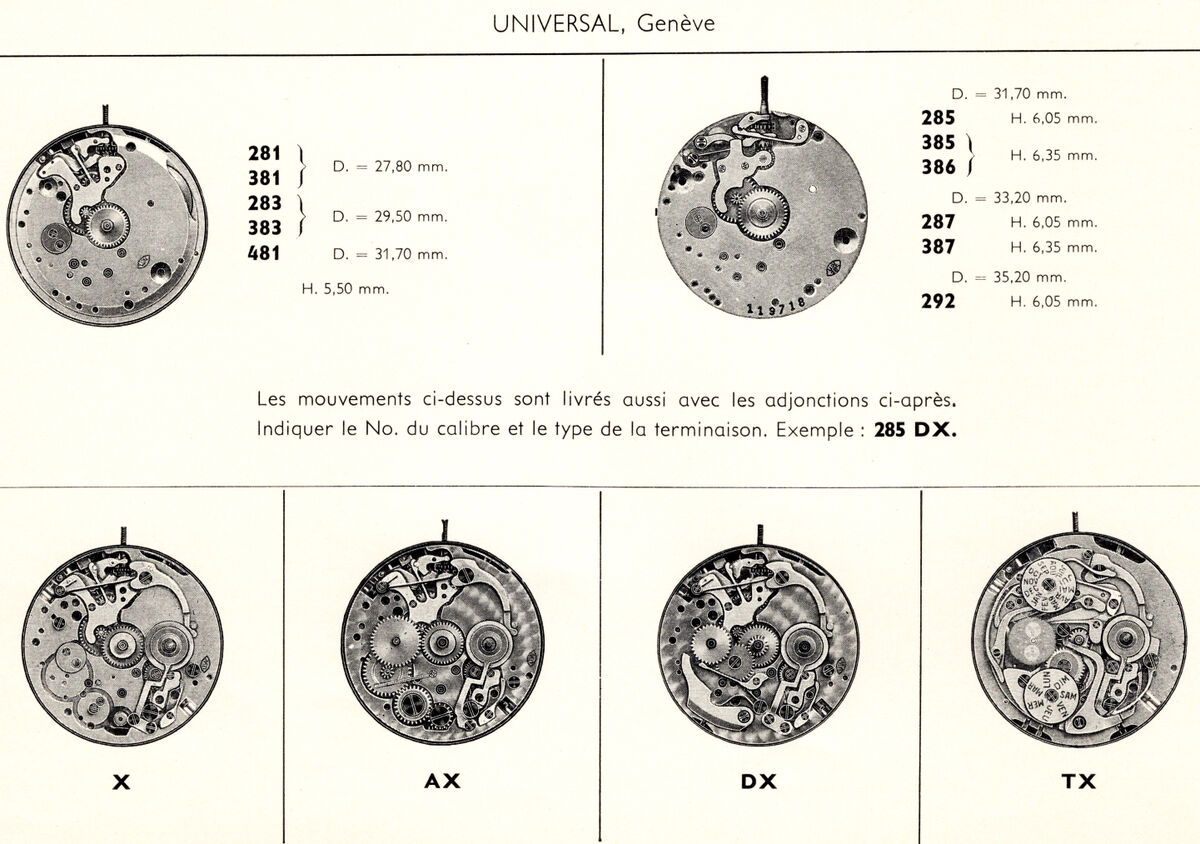
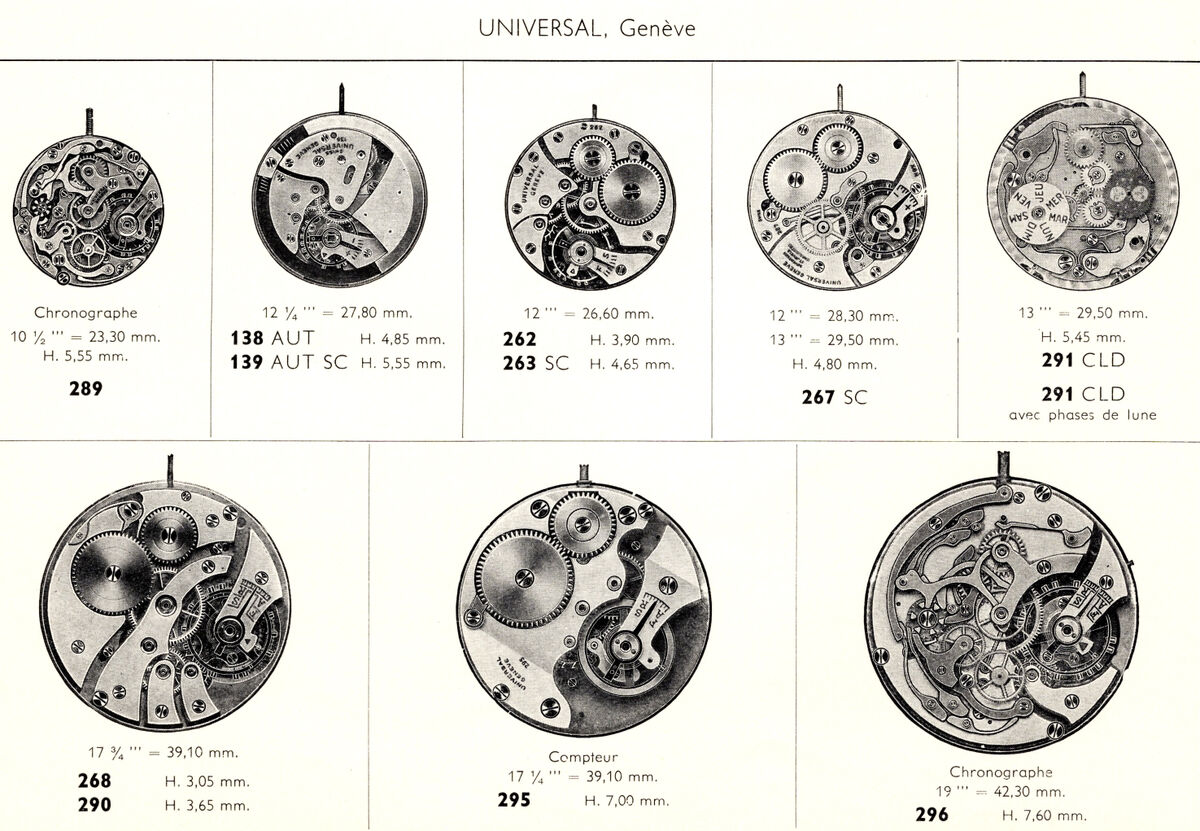
In 1932, Universal launched one of the very first two-pusher chronographs, powered by the Calibre 281 produced by Martel. Soon followed the Compur and Compax models, establishing the design codes of the modern chronograph. Zenith also used these movements and shared the same designations.
In 1935, Raoul Perret, son of Universal’s co-founder, took over the company and joined Zenith’s board of directors, reinforcing the Universal–Martel–Zenith triangle.
On 31 January 1941, Universal inaugurated a new factory in Les Ponts-de-Martel dedicated to chronographs and complicated watches. This era saw the birth of iconic models: Aero-Compax, Dato-Compax (1942) and the legendary Tri-Compax (1944).
Meanwhile, Zenith continued using Martel movements and also sourced from Excelsior Park.
In the early 1950s, Martel marketed some watches under its own name, such as the Victorious, an automatic waterproof watch with date. Still, the company remained primarily a movement maker for Universal and Zenith.
In 1958, Zenith acquired Martel Watch. The Ponts-de-Martel workshops developed the Zenith 146 calibres, including the famous 146 DP used in military CP-2 chronographs. This heritage paved the way to the revolutionary El Primero (1969). The Martel factory closed in 1976.
In 1954, Universal introduced the Polerouter, designed by Gérald Genta and fitted from 1955 with a micro-rotor movement (Calibre 215). This patent, filed in May 1955 and granted in 1958, made the Polerouter a technical and design icon.
In 1967, Bulova took control of Universal Genève. The brand produced tuning-fork watches, marketed as Unisonic, echoing the Accutron era. Universal remained under Bulova until its sale in 1977.
In 1986 (sometimes cited as 1989), Universal was acquired by the Hong Kong-based Stelux Group. Several revival attempts followed, notably for the centenary in 1994 and again in the 2000s.
In December 2023, Universal Genève was acquired from Stelux by Partners Group/CVC, the parent company of Breitling. The goal is to revive the brand, focusing on its chronograph heritage, with a relaunch planned for 2026.

A La Clinique Horlogère
Rue du Creugenat 29
2900 Porrentruy
Tél +41 32 466 14 86
info@cliniquehorlogere.ch
