Restoration of the clock
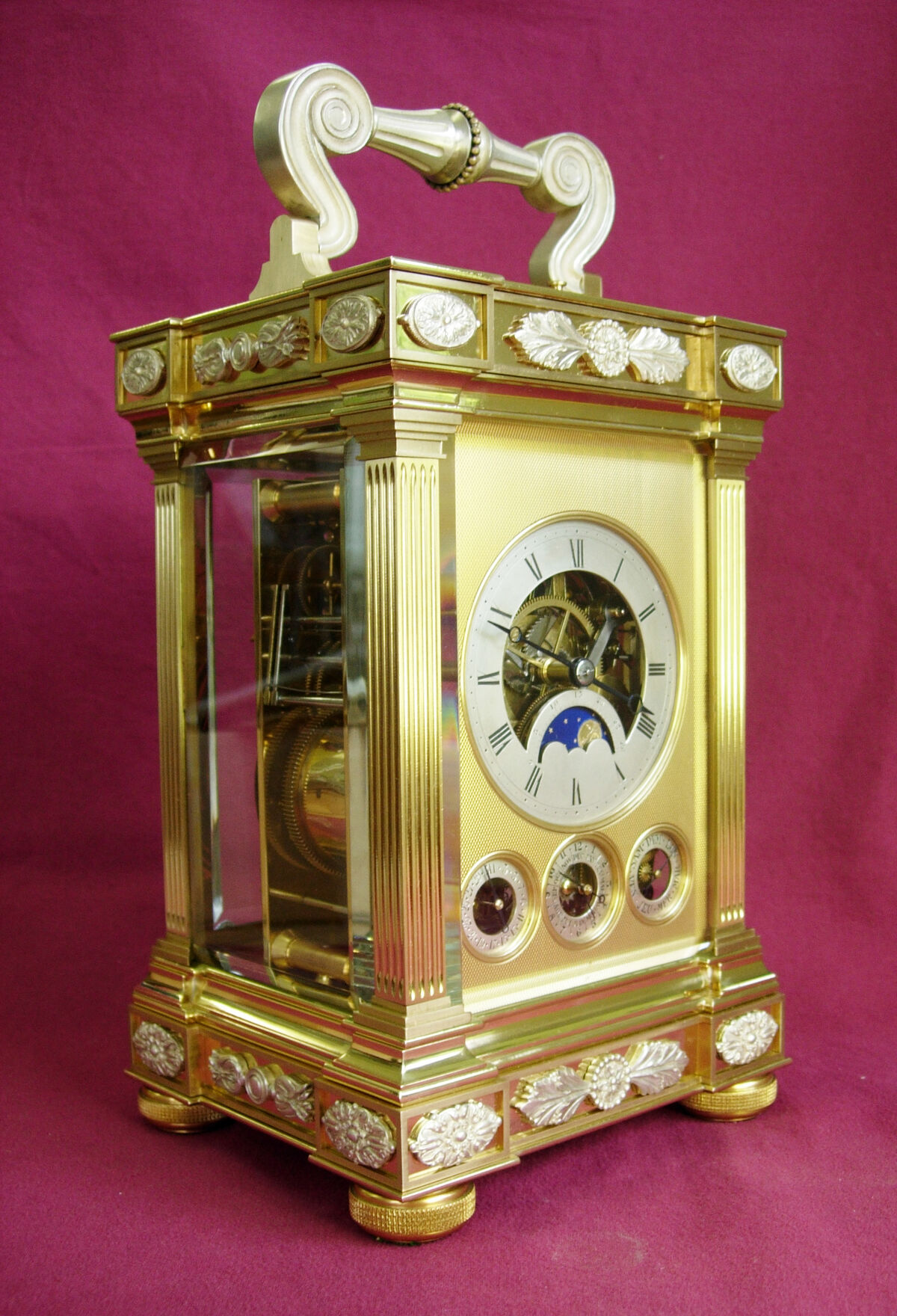
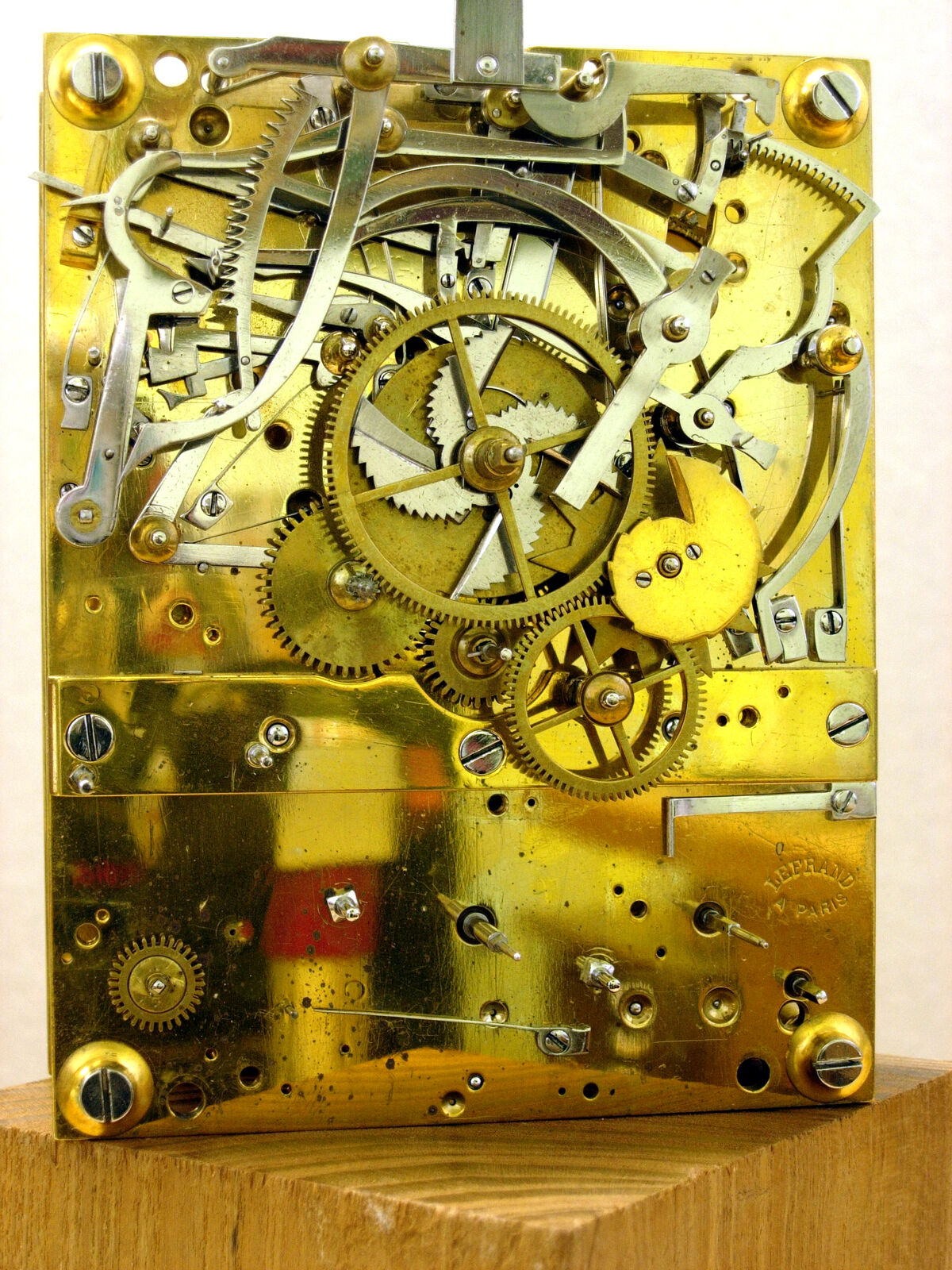
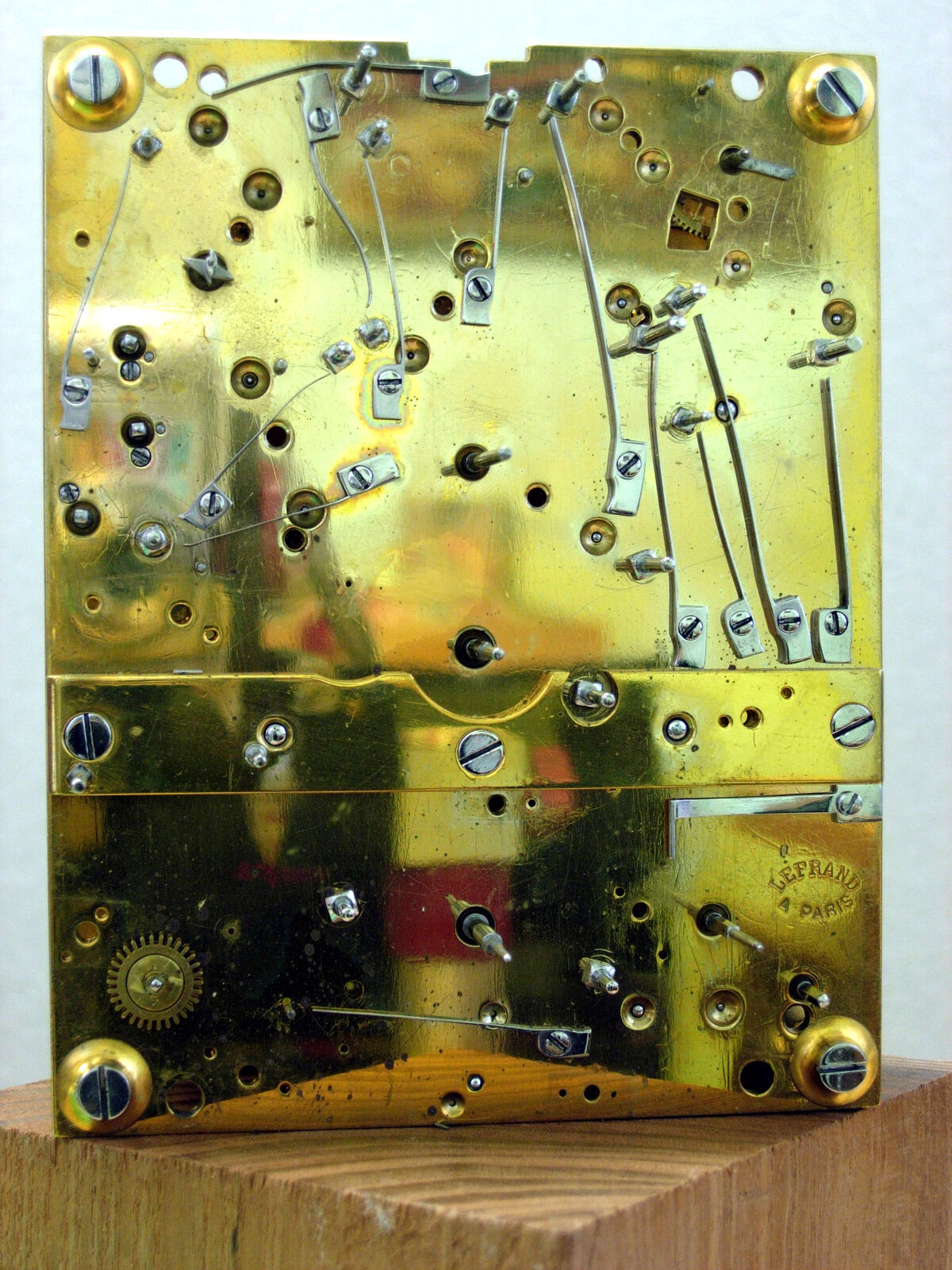
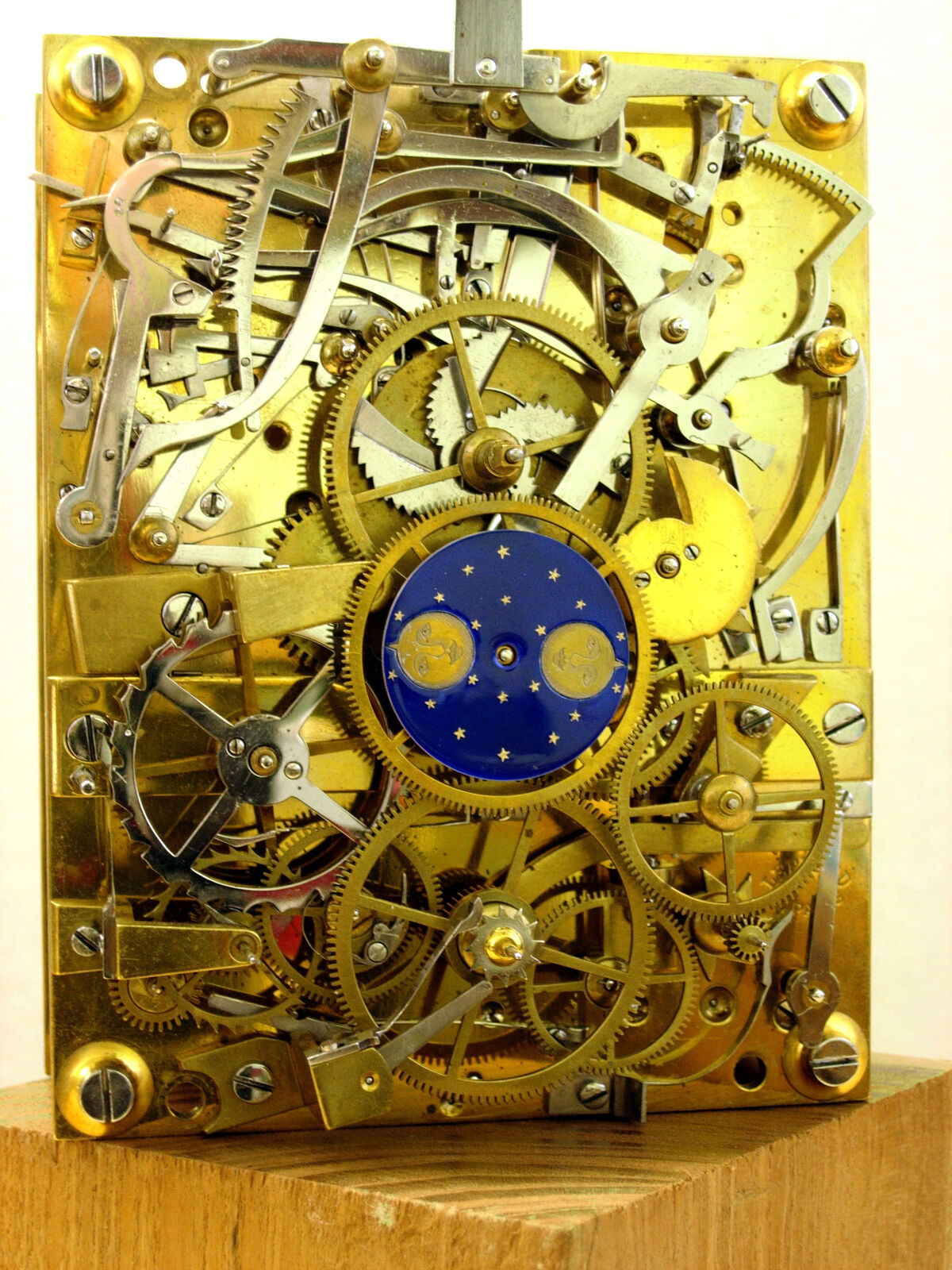
This complicated travel clock, signed Lefrand in Paris in 1876, is a true masterpiece of 19th-century haute horlogerie. Its restoration required several weeks of work, combining patience, skill and passion.
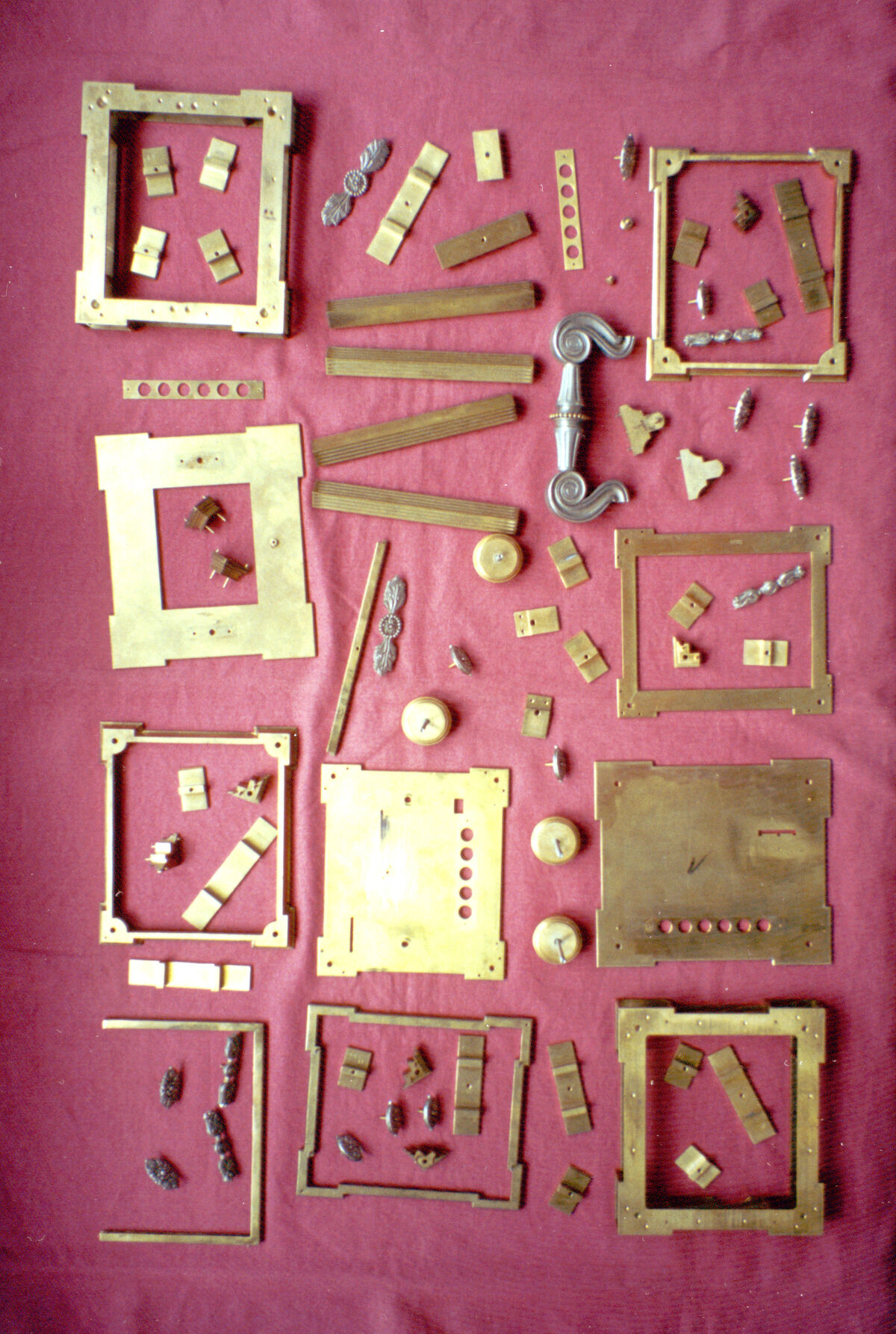
The process began with the complete disassembly of the case. Each element of the housing – columns, mouldings, ornaments and handle – was carefully separated, cleaned, lightly polished, and then protected with zapon varnish to preserve the shine of the gilded brass and protect it from oxidation. This stage alone required hours of meticulous work, bringing out every decorative detail.
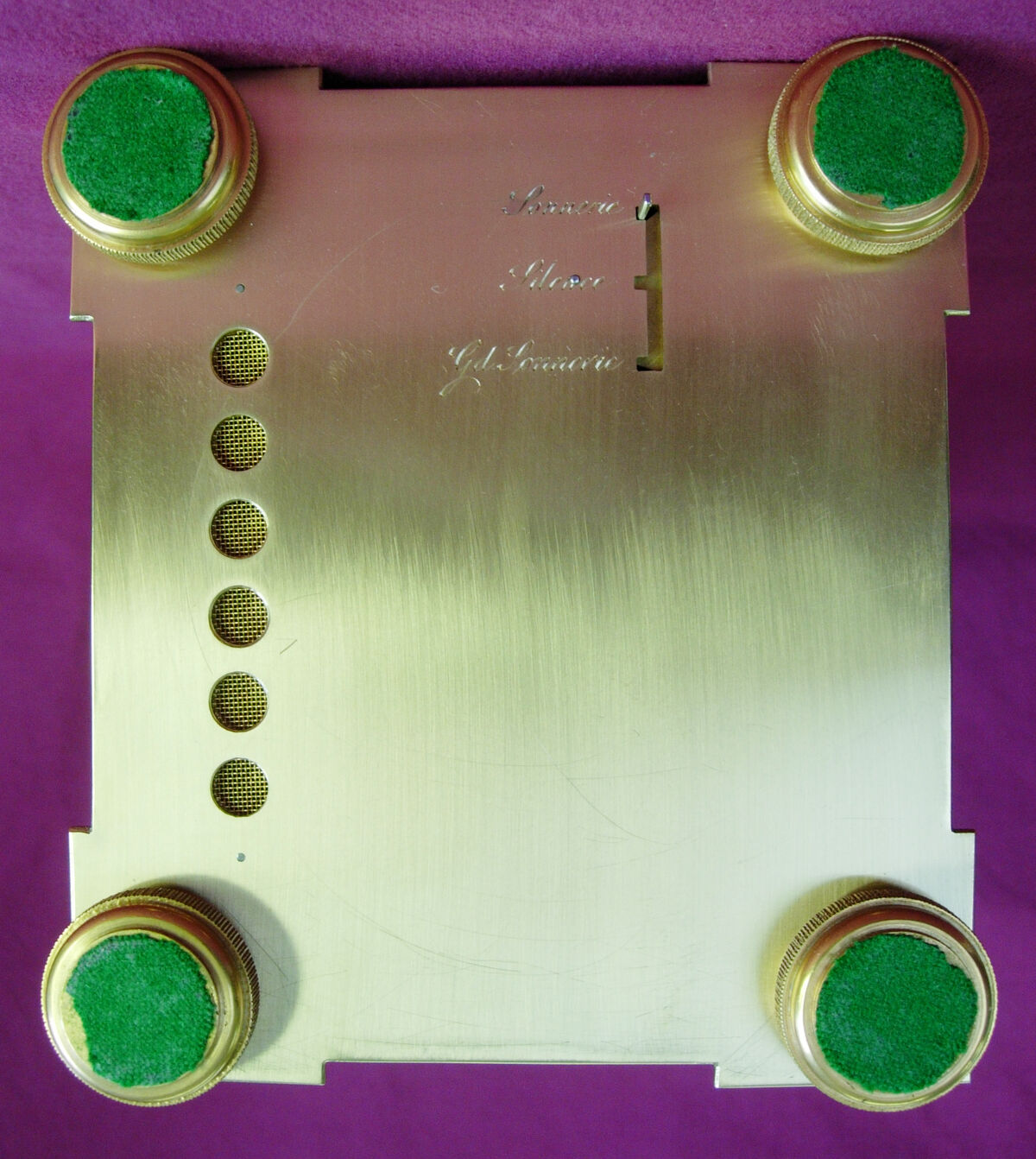
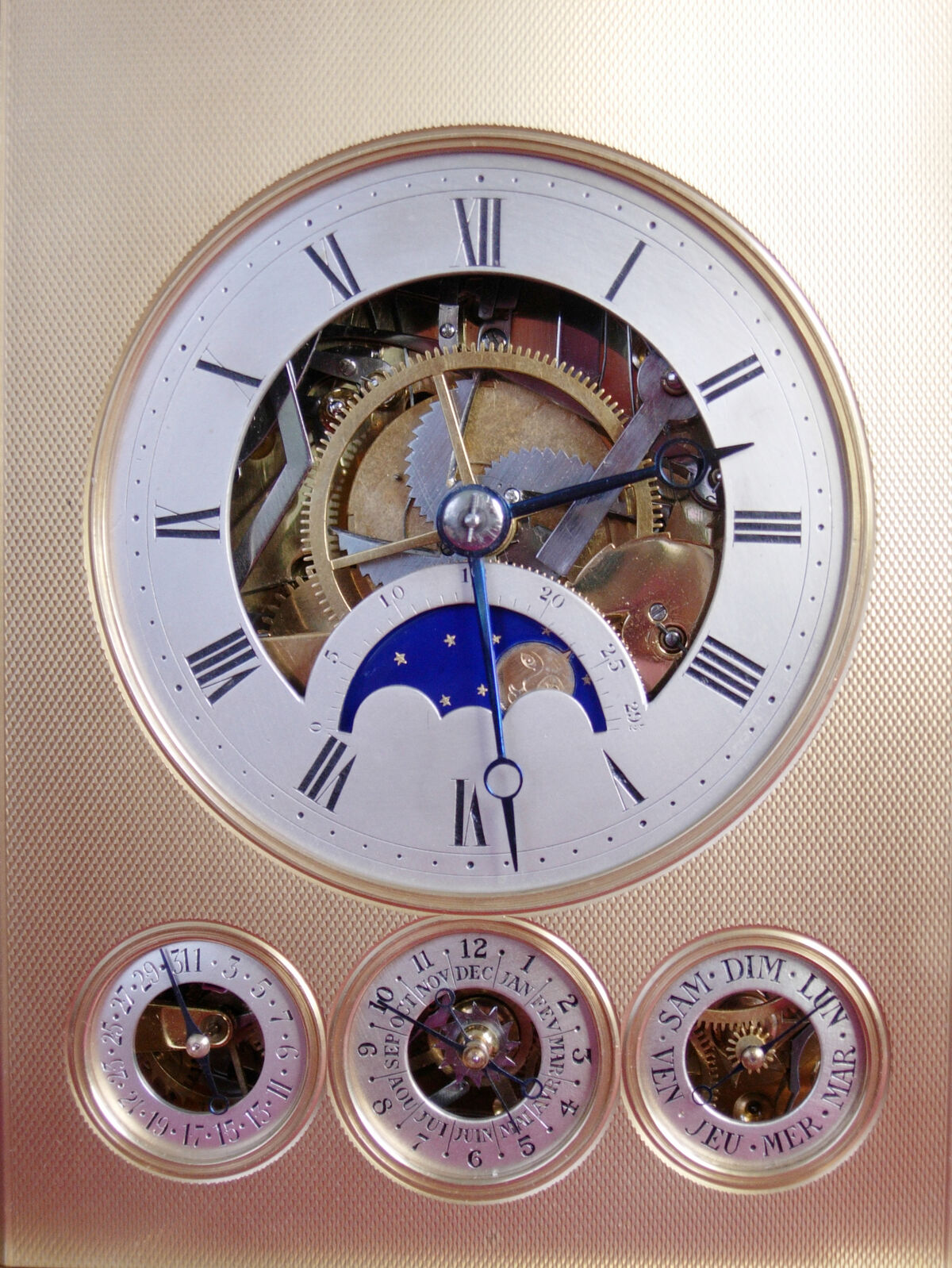
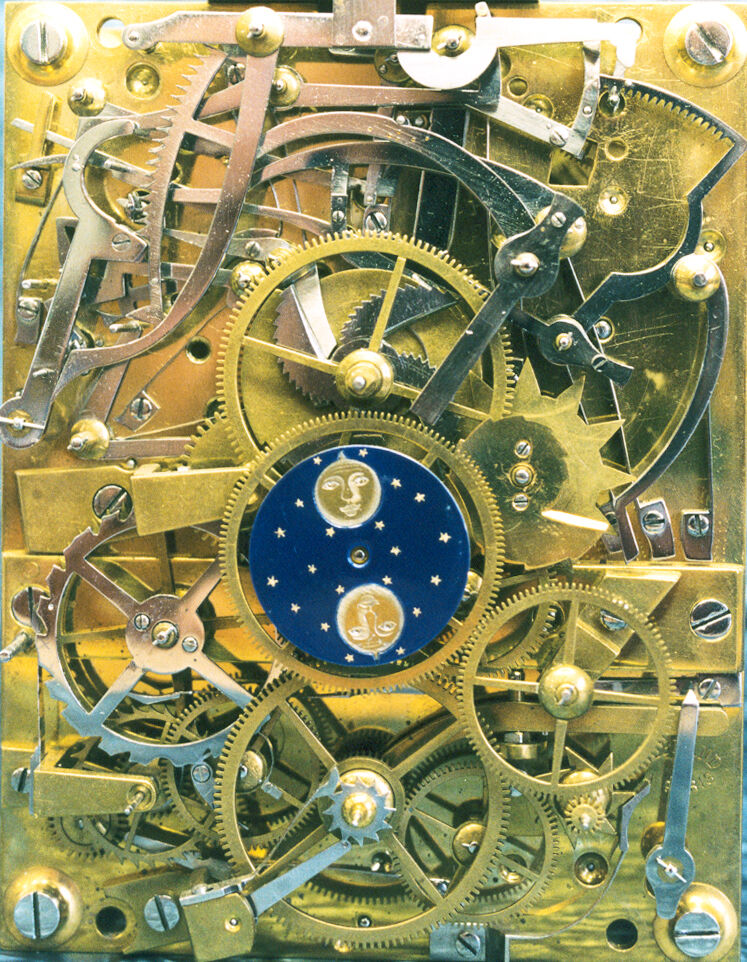
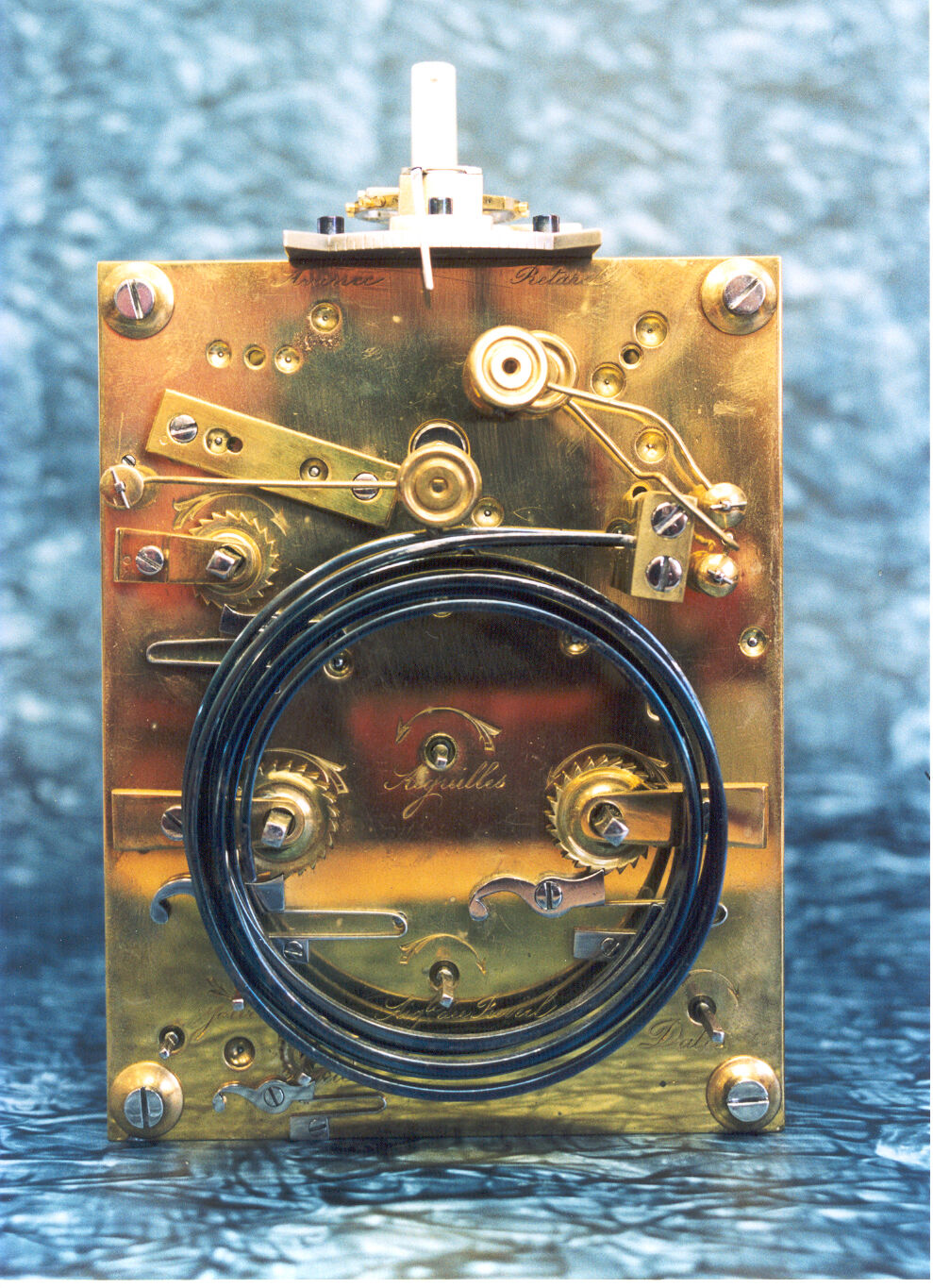
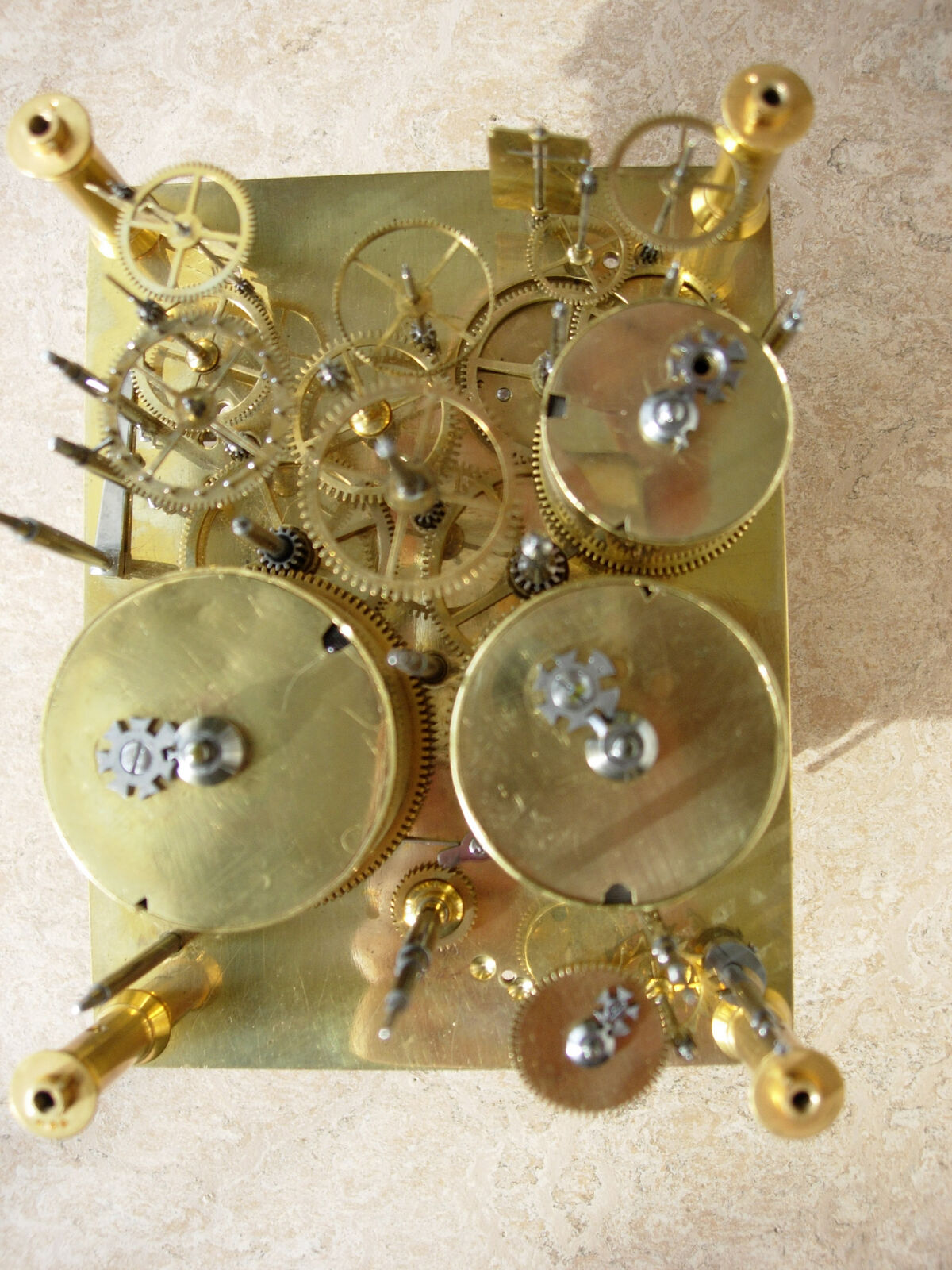
Then came the movement, of great complexity with its multiple complications: grande sonnerie, minute repeater, perpetual calendar with moon phases, and alarm. Every wheel, lever, spring and click was dismantled, cleaned and inspected. Some parts, marked by time, had to be adjusted or restored: rust removed, wear corrected, pivots re-polished.
The reassembly was a delicate moment, demanding extreme precision to restore the perfect synchronization of the three separate trains (timekeeping, striking and repeating). After numerous adjustments, the clock regained not only its visual brilliance, but also the rich sound of its chimes and the accuracy of its perpetual calendar.
Bringing such a piece back to life means reconnecting with the ingenuity and elegance of Parisian horologists of the 19th century. Each step of the restoration is a tribute to this exceptional craftsmanship, which this clock will continue to embody for future generations.